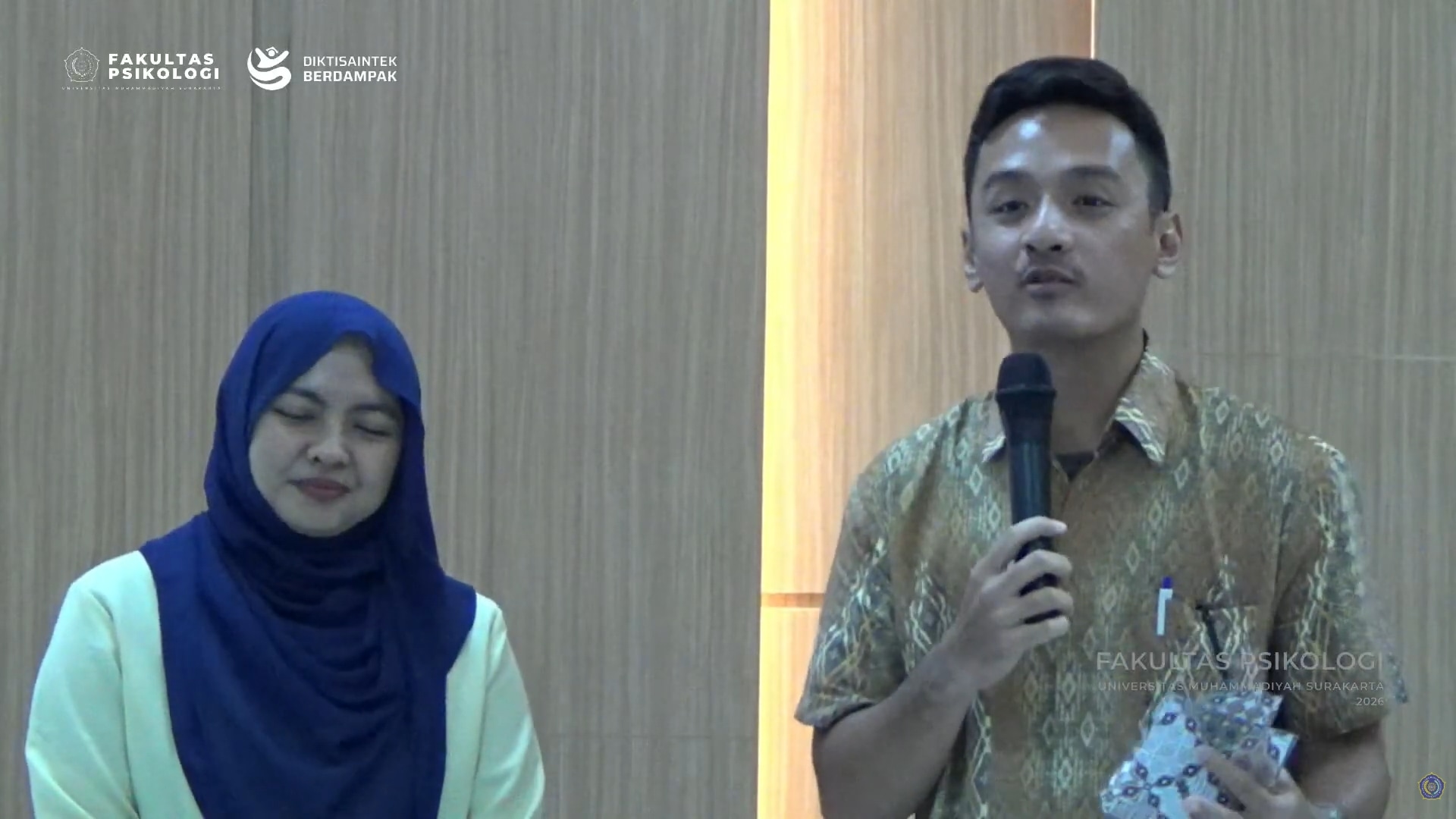
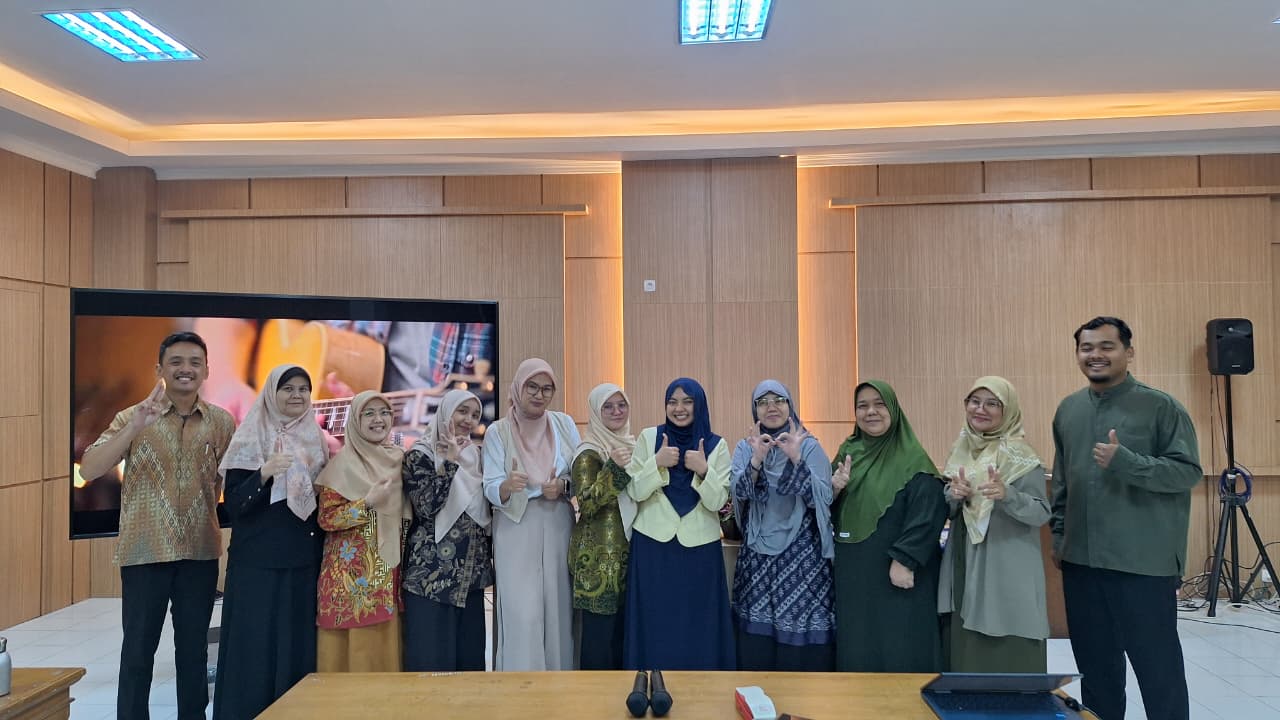
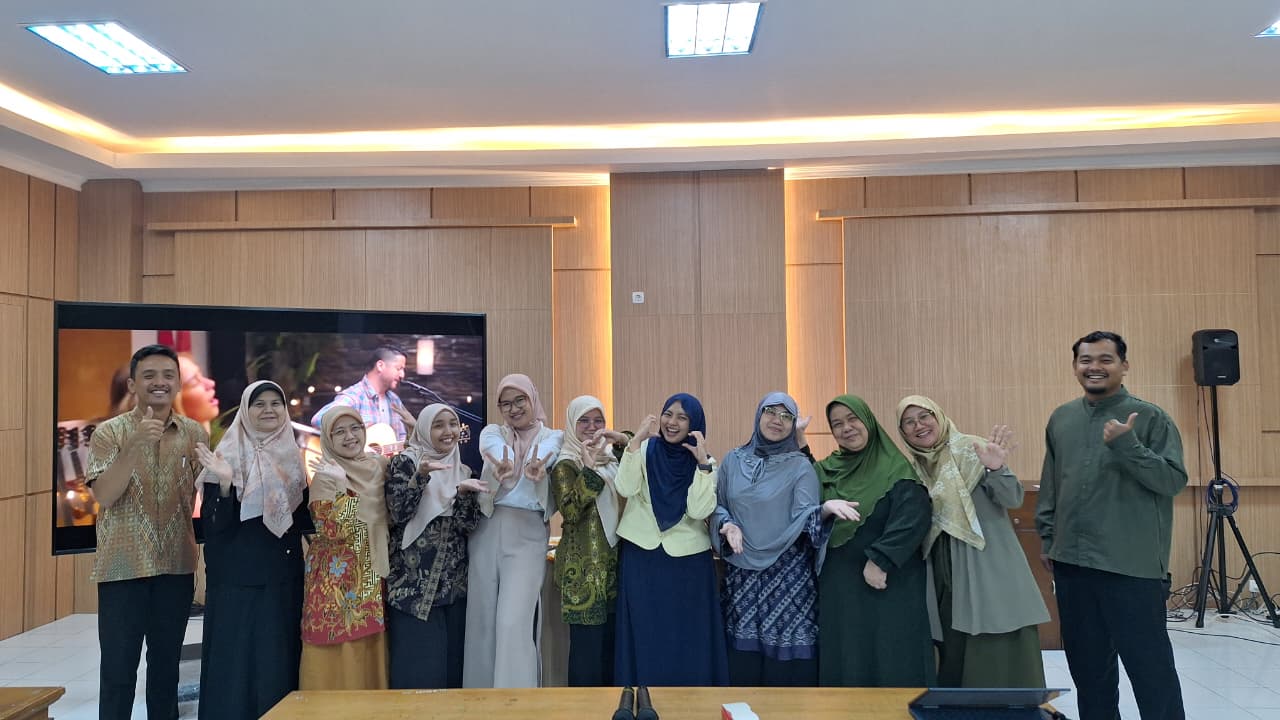
Surakarta, 29 July 2026 – The Centre for Islamic Psychology Studies, Faculty of Psychology, Universitas Muhammadiyah Surakarta (UMS), concluded its three-part Lecturer Research Capacity Development Workshop series with a session entitled Strategies for Selecting a Reputable Journal and Managing the Manuscript Submission Process. Unlike the two previous sessions, which covered research proposal writing and manuscript preparation, this third and final session focused on how academics can identify the right reputable international journals and manage the submission process effectively through to publication. The event was held in the Hybrid Room, 2nd Floor, Faculty of Psychology, UMS, featuring Gita Aulia Nurani, S.Psi., M.Psi., Ph.D., Psychologist as the keynote speaker.
Full documentation of the event is available via the following links: [YouTube] and Follow-up Session [YouTube]
Opening her presentation, Gita Aulia invited participants to reconsider how they view the process of academic publishing — not as a single, one-off event, but as a dynamic process that demands considerable patience from the writer.
“Publishing is a process, not a one-time event. Scholarly publication is a marathon, not a sprint; the right preparation and strategy before submission will save time and increase the chances of your article succeeding at the international level.” — Gita Aulia Nurani, Ph.D.
Gita set out three reasons why the publication process can be likened to a marathon:
- A Staged Process: Much like a marathon with several checkpoints along the route, academic publishing involves a series of stages. Each stage must pass an editor’s or reviewer’s evaluation before the manuscript can proceed to the next, until it finally crosses the finish line — publication.
- Dynamic and Unpredictable: The time it takes from submission to publication varies considerably — some articles are rejected quickly (desk rejection), others wait several weeks before entering the review stage, and some take months or even years before a final decision is reached.
- Requiring Strategy and Preparation: Given how lengthy the process can be, authors cannot afford to submit their work carelessly. Thorough preparation before submission is essential so that time is not wasted, as every step along the way determines whether a manuscript will keep moving forward or stall midway.
Other key points covered in the session included:
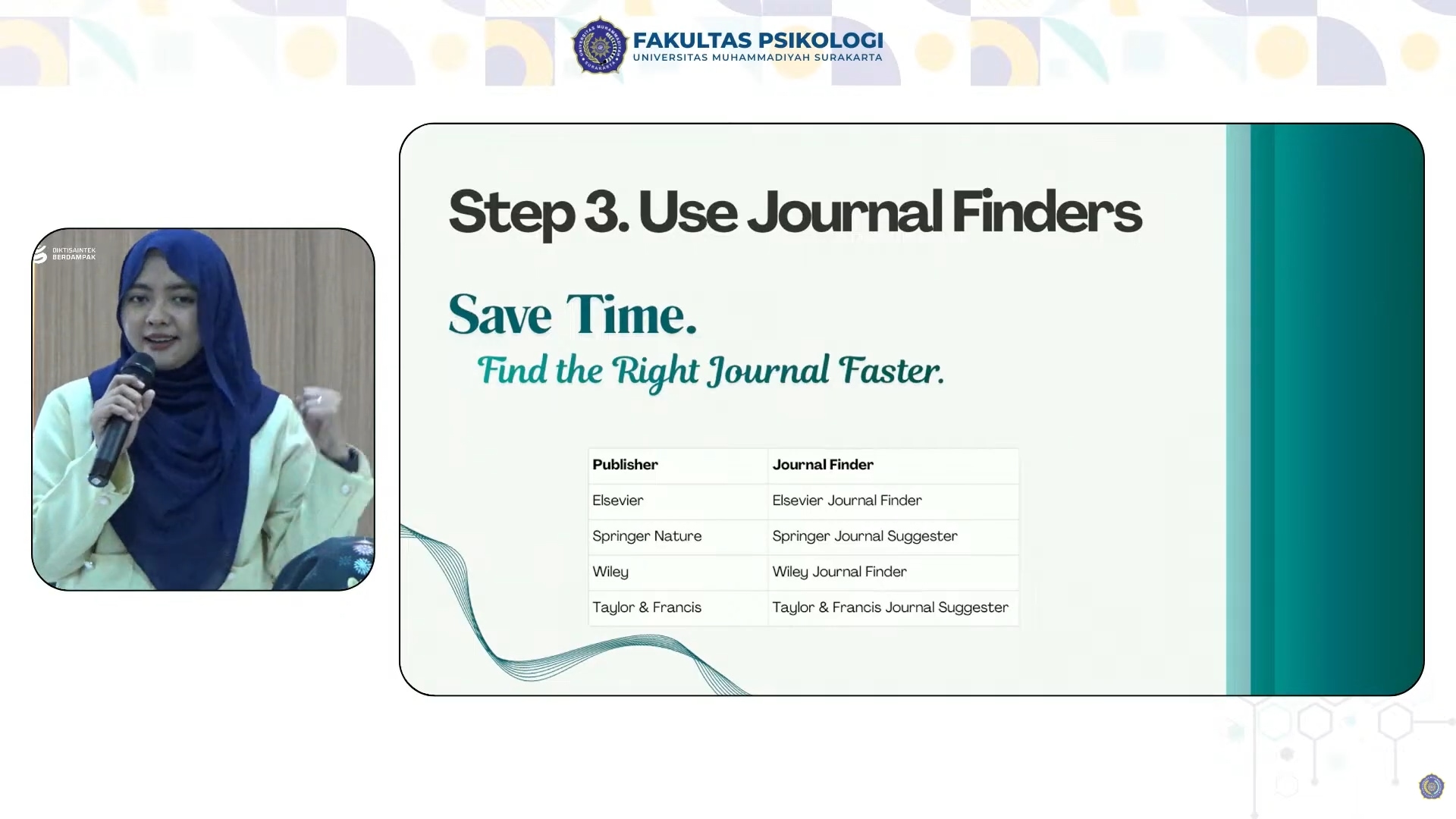
- Making Use of Journal Finders: Participants were introduced to the Journal Finder or Journal Suggester tools offered by major publishers such as Elsevier, Springer Nature, Taylor & Francis, and Wiley, which can help match a manuscript to the most suitable journal.
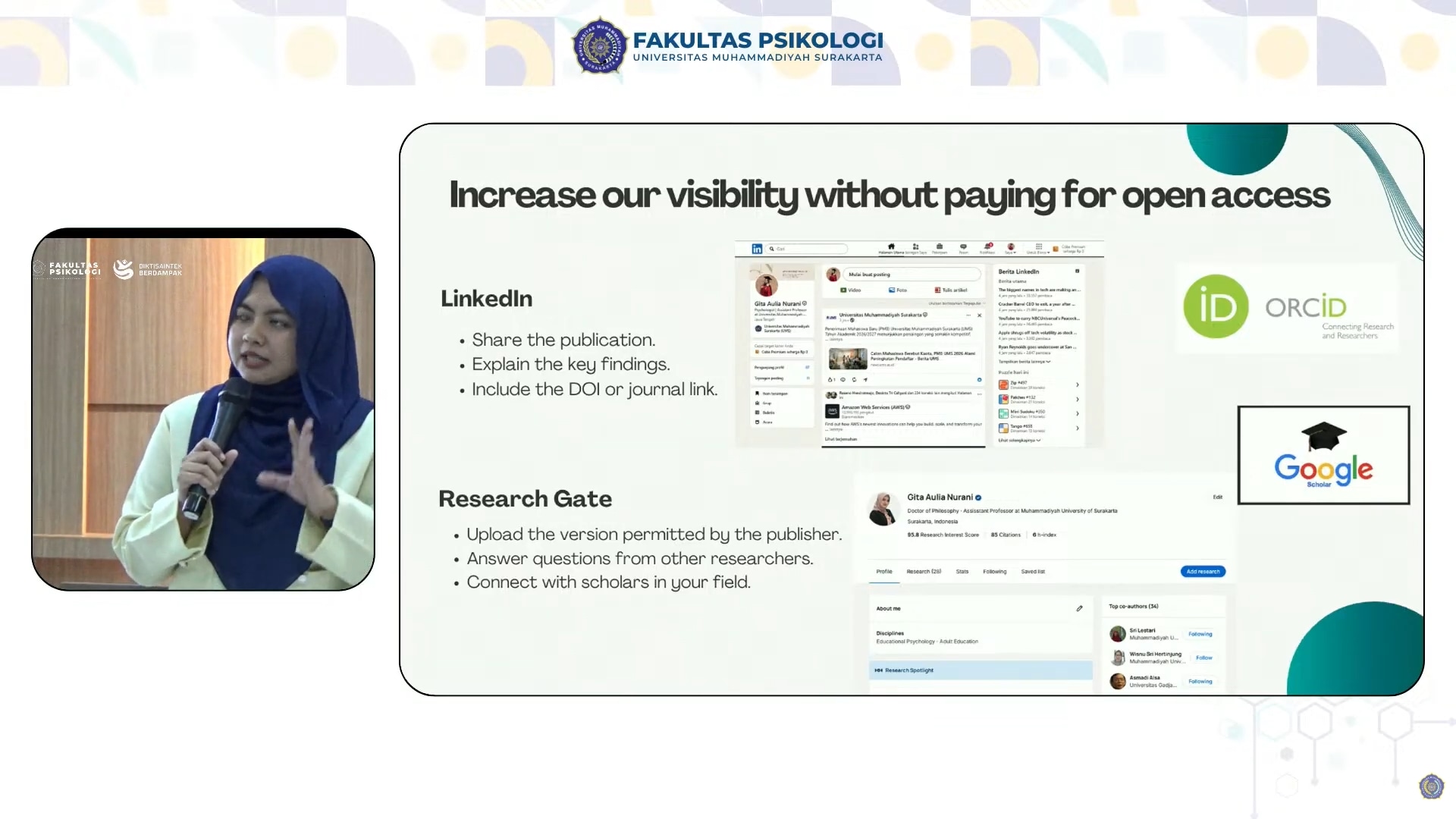
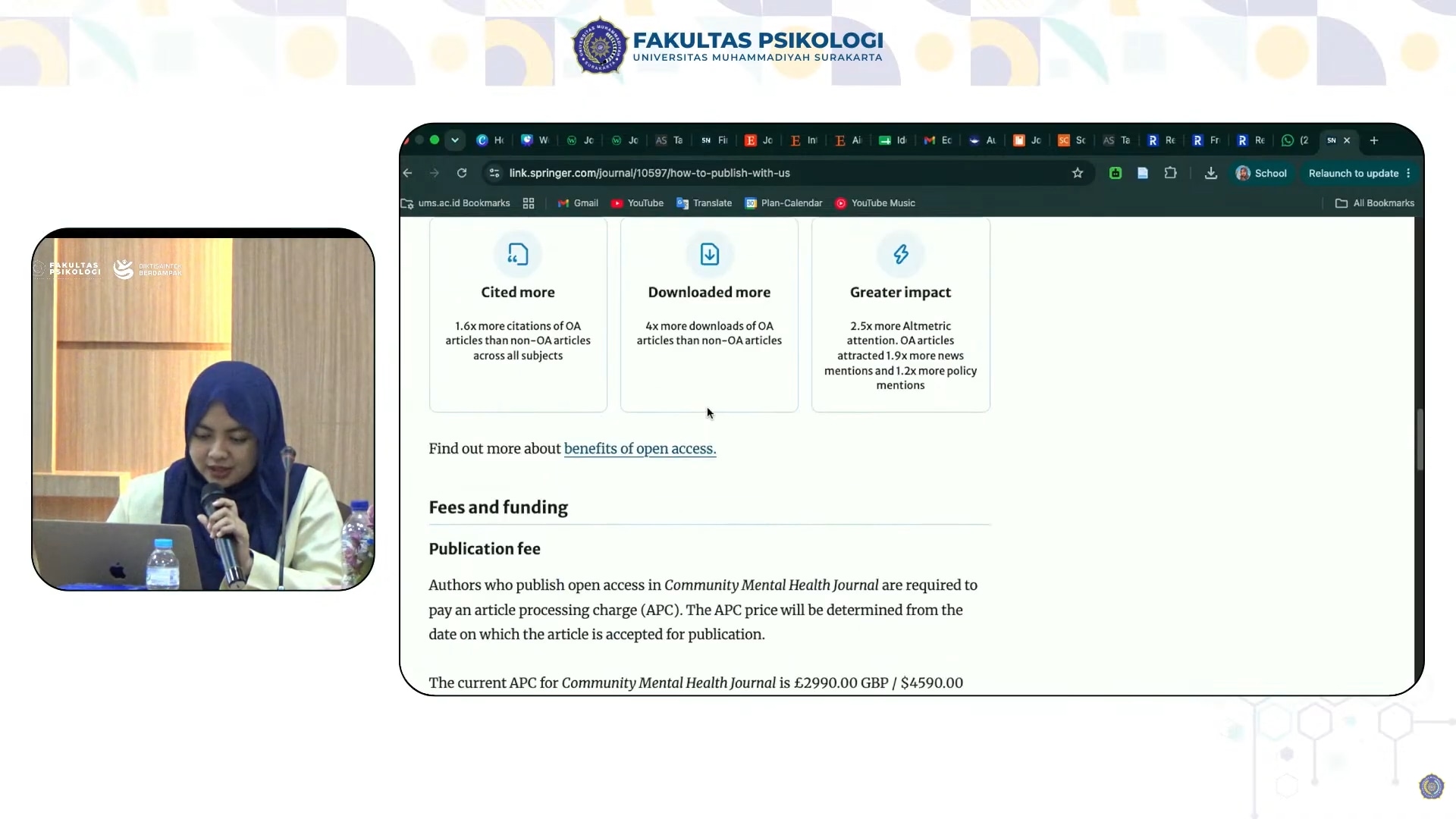
- APC and Access Considerations: Authors need to understand the difference between Open Access and Subscription (closed access) options and their respective cost implications, though they were encouraged not to abandon submission simply due to cost constraints, as free publication routes are also available.
- Verifying Journal Credibility: Participants were taught to use SJR (Scimago Journal & Country Rank) to check a journal’s quartile ranking (Q), as well as to make use of AI-based tools such as Researcher.life when searching for a suitable journal.
In particular, Gita, Ph.D. highlighted a publishing option that is often overlooked by researchers: journals operating under the Diamond Open Access model. This model offers authors a dual benefit: it is free of any publication fee (Article Processing Charge/APC), while also being freely accessible to anyone at no cost. Journals of this kind are typically run by universities or major organisations such as UNICEF and the ILO. However, she noted that because these journals are both free and open, their selection standards tend to be considerably stricter, with a longer queue for publication compared with paid journals.
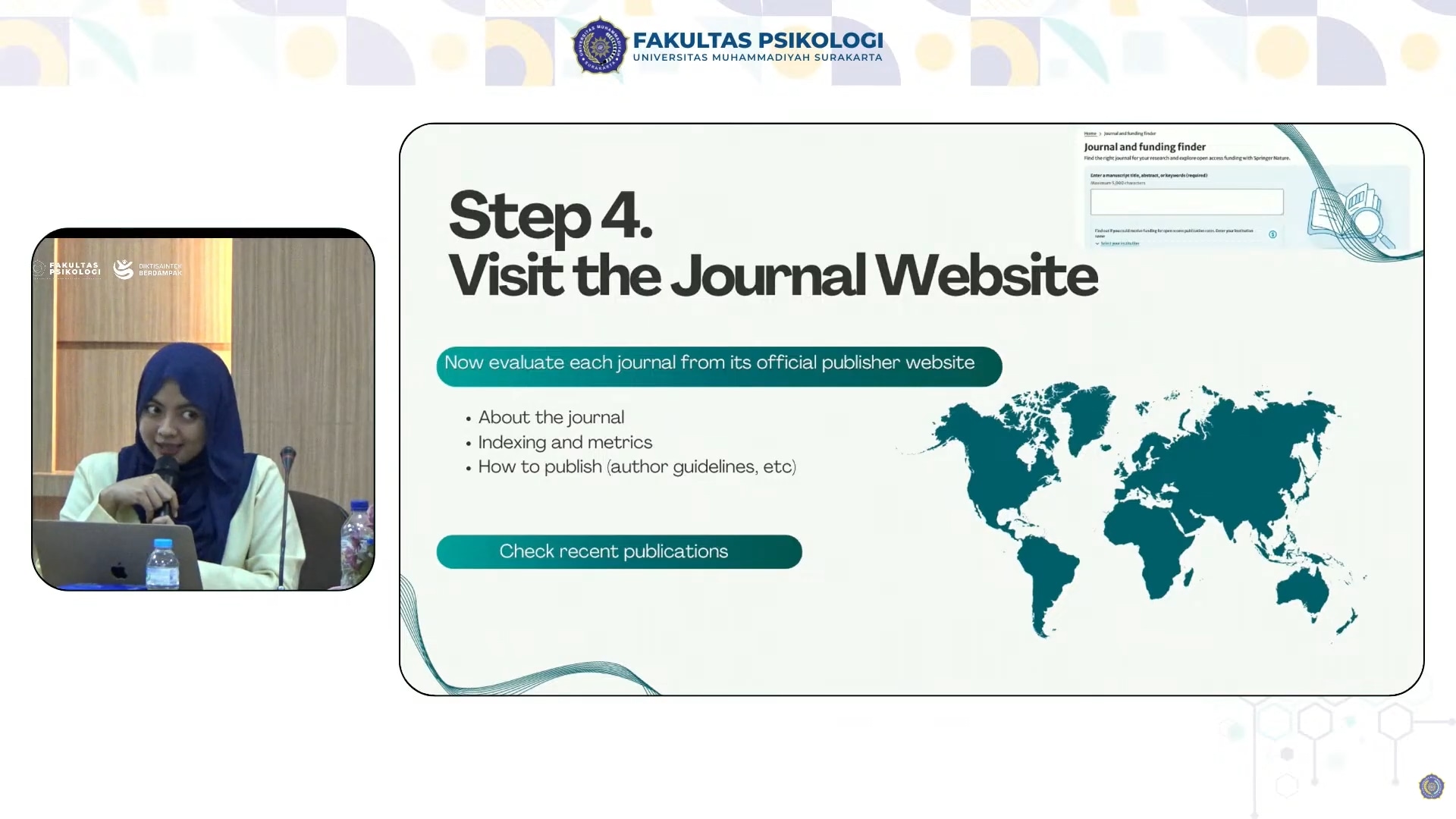
Turning to the practical steps involved in using a Journal Finder, Gita walked participants through the process in detail:
- Accessing the Search Tool: Visit the official website of a major publisher (Elsevier, Springer Nature, Taylor & Francis, or Wiley) and locate the Journal Finder or Journal Suggester feature.
- Entering Manuscript Details: Enter the title and abstract of the research article into the fields provided within the tool.
- Matching Algorithm: The system analyses the text entered to match the manuscript against the scope and focus of relevant journals under that publisher.
- Identifying Suitable Journals: The search results generate a list of potential journals. Participants must then review the details of each one — such as impact factor, quartile ranking, and open access fees — to determine the best fit.
As an important note, Gita reminded participants to always double-check the official website of the journal in question after receiving a recommendation from a Journal Finder, to ensure the information obtained remains accurate and up to date.
With the conclusion of this third session, the Faculty of Psychology UMS’s Lecturer Research Capacity Development Workshop series has now come full circle — spanning research proposal writing, manuscript preparation, and journal selection and submission strategy — equipping lecturers to continue producing impactful scholarly work published in reputable international journals.