Understanding LGBTQ Through a Psychological Lens: UMS Lecturer Urges Against Hasty Labelling
[Repost] Surakarta, 24 July 2026 Amid the constant flow of information circulating on social media, discussions around LGBTQ issues are often coloured by stigma and one-sided labelling made without a full understanding of the subject. Yet, from a psychological standpoint, the matter is considerably more nuanced than simply judging someone by their outward appearance.
A lecturer in Psychology at Universitas Muhammadiyah Surakarta (UMS), Lusi Nuryanti, S.Psi., M.Si., Ph.D., Psikolog, has emphasised that psychology does not automatically regard LGBTQ as a disorder. She explained that what genuinely concerns the field of psychology is when an individual experiences psychological distress as a result of the condition they are living with.
“LGBT stands for Lesbian, Gay, Bisexual, and Transgender. Sometimes a Q is added, making it LGBTQ, with the Q standing for Queer,” she explained on Friday (24/7/2026).
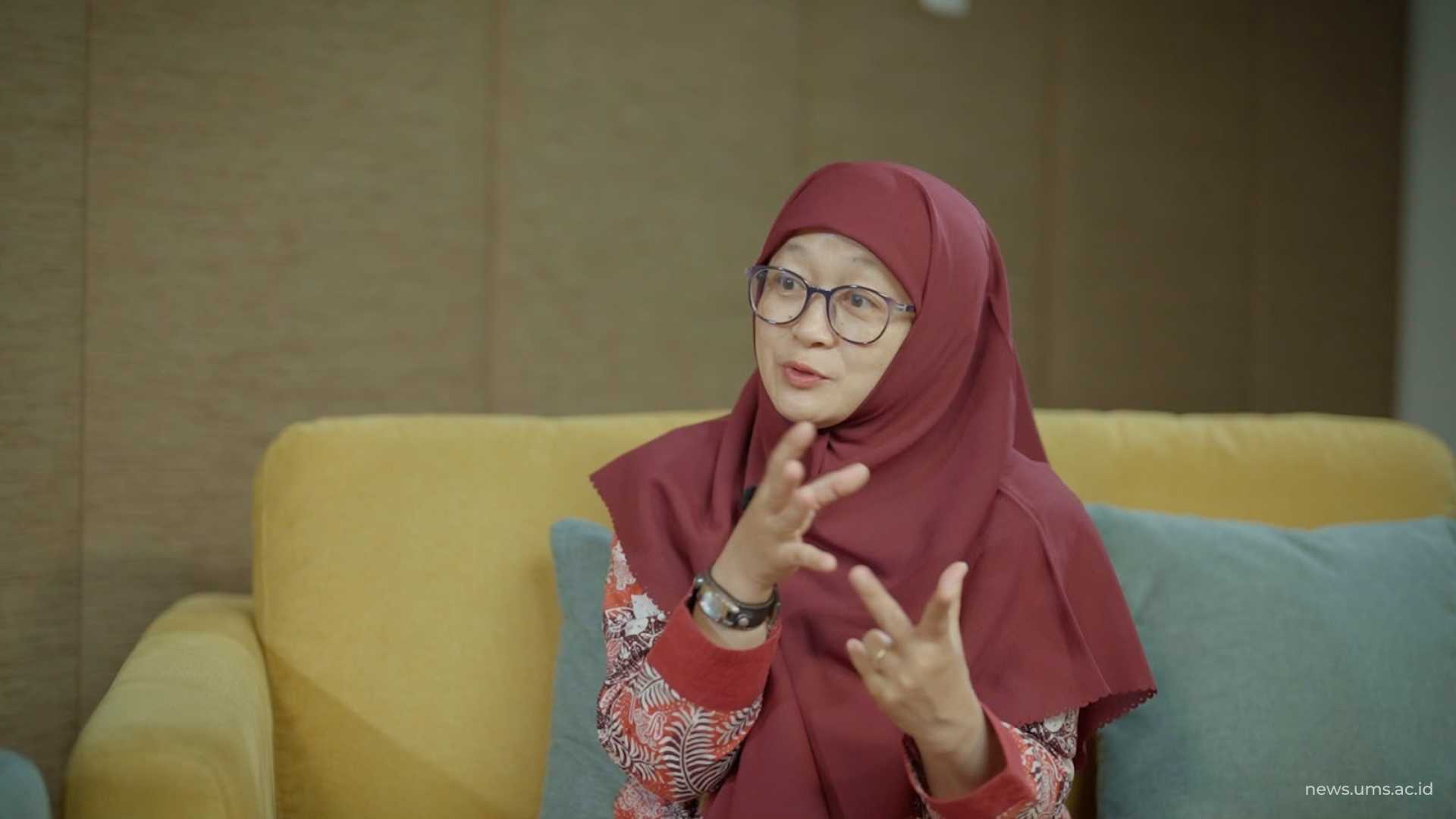
“LGBT stands for Lesbian, Gay, Bisexual, and Transgender. Sometimes a Q is added, making it LGBTQ, with the Q standing for Queer,” Lusi affirmed on Friday (24/7/2026).
According to Lusi, the term does not refer to a single, uniform group. Lesbian, gay and bisexual relate to sexual orientation — that is, a person’s emotional or sexual attraction to others. Transgender, meanwhile, concerns gender identity, namely how someone understands and views themselves as male or female. Queer, on the other hand, refers to those still in the process of questioning or exploring their sexual orientation or gender identity.
She went on to explain that, within Islamic teaching, the sexual orientation considered to be in line with human nature (fitrah) is between men and women. Accordingly, lesbian describes a woman attracted to other women, gay describes a man attracted to other men, while bisexual describes attraction to both sexes.
That said, Lusi cautioned against conflating sex, sexual orientation and gender identity, which are often mistakenly treated as one and the same.
Sex, she noted, is a biological condition present from birth, whereas sexual orientation concerns a person’s attractions. Gender identity is something else again, relating to how a person perceives themselves.
“So gender identity, within the LGBT acronym, refers to the T for transgender. Gender identity is about how a person identifies themselves, understands themselves, perceives themselves as male or female,” Lusi explained.
She added that a person’s gender identity cannot be determined merely through the observations of others.
“We can’t judge someone and say, ‘oh, their gender identity is male or female.’ It’s about what that person understands about themselves. That’s gender identity. So you might find a man who identifies as a man, a man who identifies as a woman, or the other way around. That’s gender identity,” she explained.
Because every individual’s life experience differs, Lusi believes that labelling someone should be approached with great care, as the consequences extend beyond psychological wellbeing to a person’s social relationships as well.
“LGBT identity really cannot be recognised just by looking once. You simply can’t tell from someone’s outward appearance alone,” she said.
She noted that no two individuals in the world share an identical psychological makeup. Personal character, life experience, upbringing within the family, and social environment all shape a person’s responses in different ways. For this reason, psychology never concludes that a particular behaviour arises from a single cause alone.
Furthermore, LGBTQ in and of itself cannot be classed as a disorder.
“From a psychological standpoint, it becomes a concern when that differing sexual orientation leads to stress, internal or external conflict, or problems that go on to disrupt the individual’s ability to function in daily life,” Lusi explained.
For a psychologist, she said, the primary focus is not someone’s sexual orientation in itself, but rather the point at which that condition becomes a source of distress disrupting everyday life.
Lusi explained that individuals still at the questioning, or “queer”, stage often go through a long and difficult process of searching for self-understanding. This is precisely where psychology has a role to play, helping individuals cope with stress, inner conflict, and any social difficulties that may arise.
She further stressed that a person’s outward appearance alone is not a reliable basis for identifying their orientation or identity.
“Even applying Islamic values, we can’t simply jump to conclusions. If someone hasn’t told us about their sexual orientation, we don’t know either. We can’t tell just by looking,” Lusi explained.
When such issues begin to affect a person’s self-confidence, social relationships, or mental health, Lusi said psychological support becomes essential.
“Once it starts showing up as behaviour and begins to cause difficulties — for instance, someone becoming withdrawn or struggling to socialise for fear of being judged — that’s when a psychologist steps in to help address these issues,” she said.
Within the context of higher education, Lusi said universities carry a responsibility to provide both education and support. Drawing on the Muhammadiyah Tarjih Council’s ruling, the approach taken is not one of passing judgement on the individual, but of offering rehabilitative support through counselling or therapy.
“If a student happens to be in that situation, the university also has a responsibility to provide education and offer rehabilitative support, for instance through counselling or therapy,” she said.
She further encouraged the public to educate themselves before passing judgement on others, particularly on social media.
“I’d really stress that we need to educate ourselves before judging others. Understand first. They are still human beings — it is their behaviour that is forbidden. So we should still respect and value them as people, and many of them need help. If they come to you, help them, listen to them,” she urged.
She added that universities bear a responsibility to deliver accurate, knowledge-based education, and to encourage the campus community to build a comprehensive understanding rather than rely on assumptions or unverified information. One of the most fundamental steps, she said, is to avoid labelling someone based solely on their appearance, since truly understanding another person requires a far deeper process than what is visible on the surface. (humas)