History
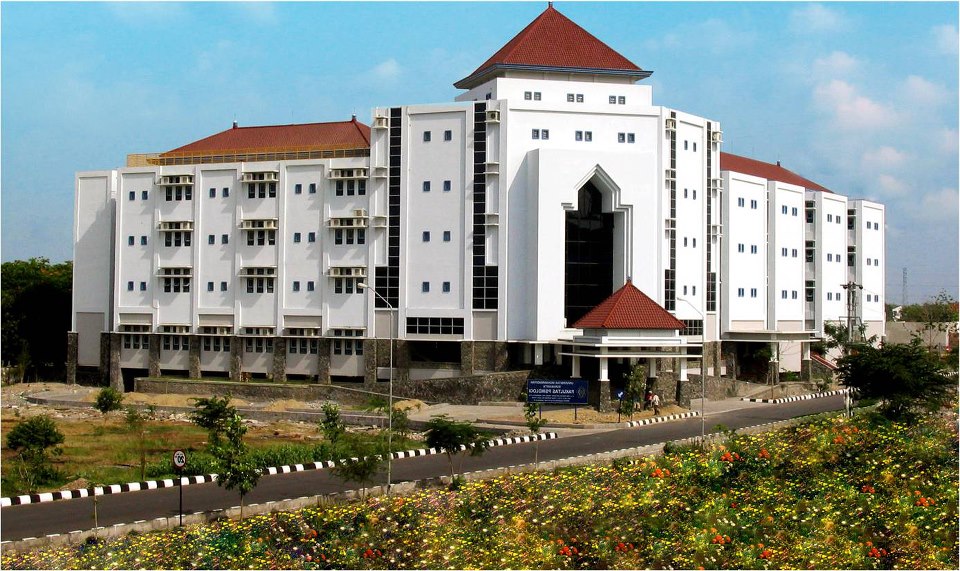
The Faculty of Psychology at Muhammadiyah University of Surakarta (FPsi UMS) is one of 12 faculties at UMS. Established in 1983 through Rector’s Decree No. 092/II/1983, FPsi UMS was a pioneering Faculty or Study Program of Psychology in Surakarta, and at the time of its establishment, it was the only one in Central Java. Nationally, within Muhammadiyah and Aisyiyah universities, it was the first Faculty or Study Program of Psychology to be established. The establishment of the Faculty of Psychology was one of Muhammadiyah’s efforts to realize its ideals of realizing a truly Islamic society through charitable endeavors and education, in this context, realizing a society of physical, mental, social, and spiritual well-being.
At its inception, the Faculty of Psychology was affiliated with the Faculty of Psychology at Gadjah Mada University (UGM). At that time, public interest in the Faculty of Psychology was very low, attracting only a dozen students each year. The entire FPsi UMS academic community remains committed to striving for continued progress and development, enabling it to guide change in society. Over a period of more than 40 years, FPsi UMS has continued to experience very significant development, both in terms of facilities and infrastructure, capacity and quality, as well as increasing its role from the local to the international level.
At its inception, the Faculty of Psychology had only one department (Prodi), the Department of Psychology (Bachelor’s Degree). Currently, the Faculty of Psychology has FIVE study programs: the Bachelor of Psychology Program (UNGGUL accredited), the Master of Professional Psychology Program (established in 2004, accredited B), the Master of Psychology Program (established in 2007, accredited EXCELLENT), the Doctoral Psychology Program, established in 2022 (accredited GOOD), and the Professional Psychology Education Program, established in late 2023 (accredited B).
FPsi UMS has a vision of “Becoming a center for education and development of science and technology in the field of Islamic and Indigenous Psychology, providing direction for change by 2029.” This vision arose from the FPsi UMS academic community’s concern about the development of Western-oriented and value-free psychology. Western psychology is very advanced in terms of the development of successfully formulated theories, but it suffers from weaknesses in moral and spiritual aspects. Therefore, in the early 1990s, ideas emerged about the importance of developing psychological science that refers to the Qur’an and As Sunnah.
The enthusiasm for developing Islamic-inspired Psychology continues to grow, as evidenced by the holding of the first National Symposium on Islamic Psychology at UMS in 1994. At this symposium, many experts from various fields (Psychology, Islamic Religion, Philosophy, Sociology, Anthropology, and others) were present to share their thoughts on Islamic Psychology. In 1998, the National Symposium on Islamic Psychology was held again at UMS with the theme of Research Methodology in the field of Islamic Psychology. In October 2003, FPsi UMS was again entrusted to organize the first National Congress of the Islamic Psychology Association. Due to the large number of scientists who would attend the congress, the event which was originally to be held at the UMS campus was finally moved to the Sahid Raya Hotel, Surakarta City. At that time, an agreement was made to change the term Islamic Psychology to Islamic Psychology.
It seems that the spirit of developing Islamic Psychology continues to thrive in the hearts of the UMS Faculty of Psychology academic community. This is evidenced by the establishment of the UMS Psychology Doctoral Study Program in 2022, which carries the vision of “A center for the development of psychology integrated with Islamic values” and the mission of “Producing competent psychology doctors who uphold civilized values and excel in the development of psychology based on Islamic values.” May Allah Subhanahu Wa Ta’ala be pleased with all our endeavors. Amen, O Lord of the Worlds.