[Repost] ums.ac.id, SURAKARTA – Students from Universitas Muhammadiyah Surakarta (UMS) have once again achieved a remarkable milestone. A cross-disciplinary student team successfully clinched a Gold Award at an international innovation competition in Malaysia for developing MoriFresh (Moringa and Neem Nano Spray), an innovative nanospray formulated from moringa and neem leaf extracts designed to aid in diabetic wound care.
The team is led by Psychology student Muhammad Raihan Arrasyid. Alongside peers from various academic disciplines—Taqiyyah Nurul ‘Azzah (Physiotherapy), Irfan Malik Tamroini (Islamic Education), Hanin Shohwati Muthi’ah and Sri Kusuma Dewi (Pharmacy), and Alfa Utami (Psychology)—he developed the innovation that ultimately secured the championship.
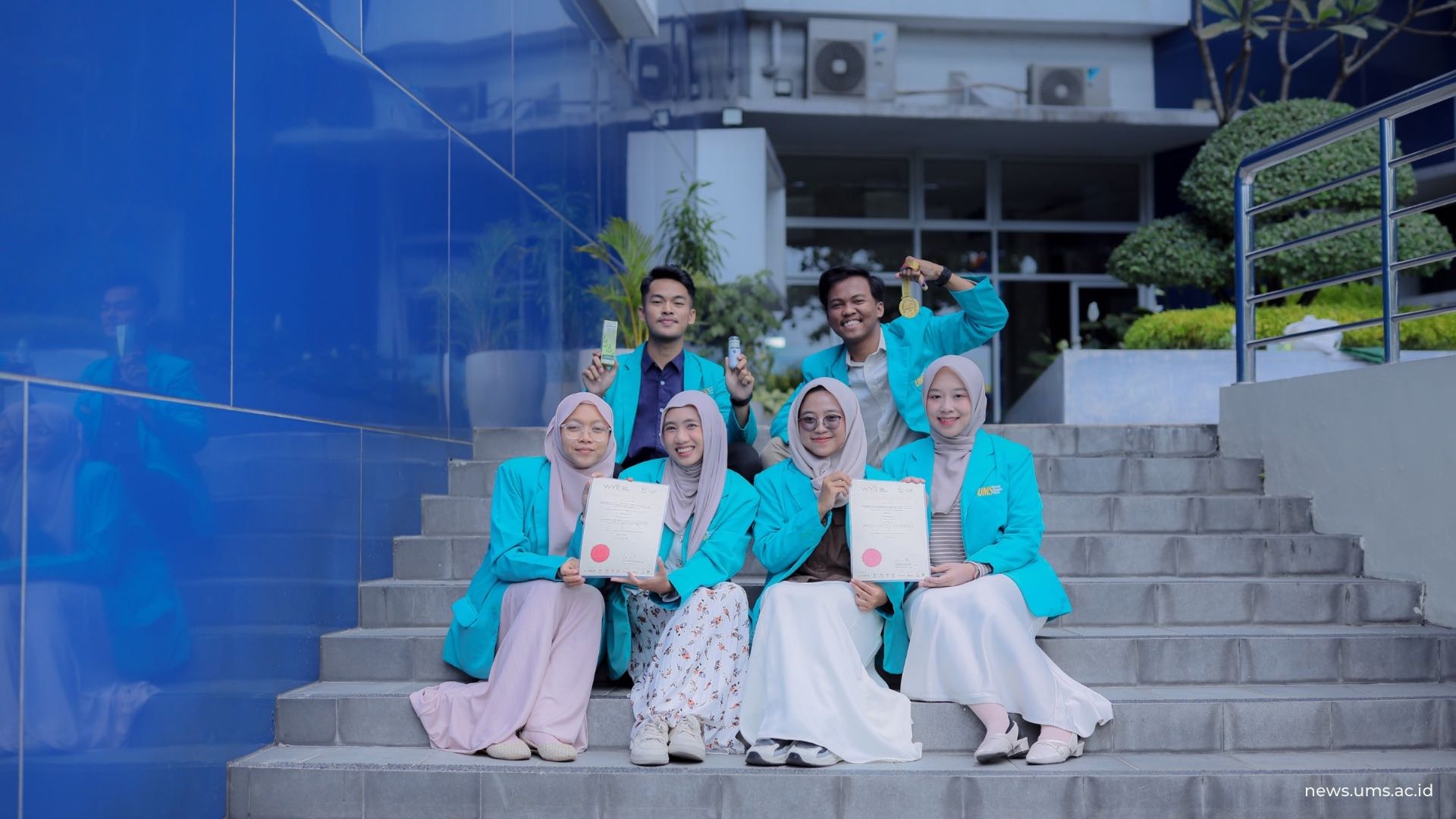
Muhammad Raihan Arrasyid, affectionately known as Rasyid, explained that MoriFresh was born out of deep concern over the high incidence of diabetic wounds that frequently lead to severe complications. According to him, diabetic wound infections remain a leading cause of preventable disabilities.
“Neem leaves function to accelerate wound closure, while moringa leaves act as an antibacterial agent. Thus, in addition to helping clear bacteria, this product also strives to speed up the diabetic wound healing process,” he explained on Friday (June 19, 2026).
He elaborated that nanospray technology was chosen because its microscopic particle size allows for easier skin absorption, penetrating pores far more effectively than conventional preparations.
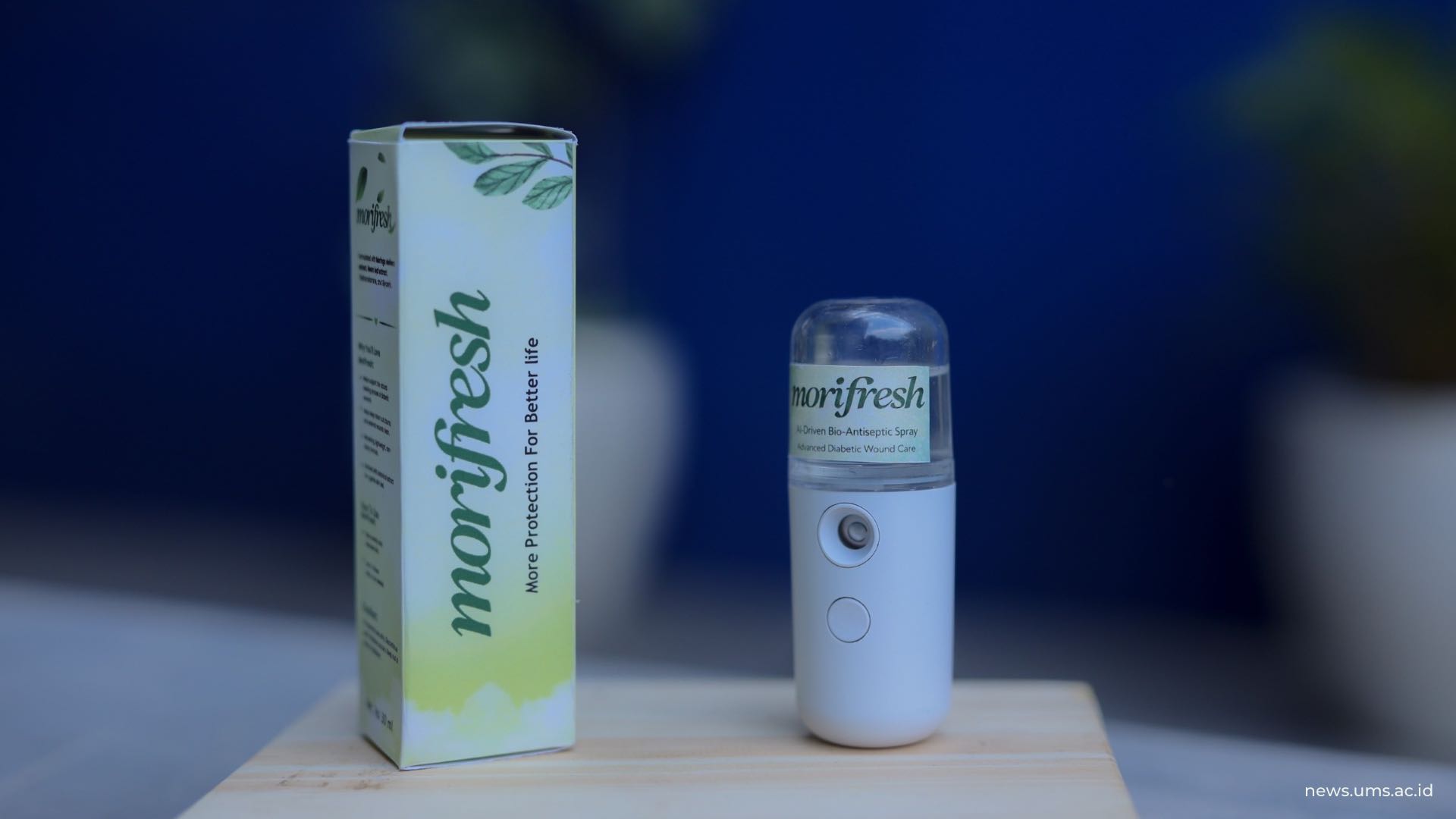
“The nano-sized particles ensure optimal absorption. As far as we know, a nanospray utilizing moringa and neem leaves for diabetic wounds is exceedingly rare; in fact, we have yet to find a similar product,” he added.
Through the team’s literature review, current diabetic wound care continues to face numerous challenges. These range from recurrent infections caused by bacteria such as Staphylococcus aureus and Pseudomonas aeruginosa, adverse effects from excessive chemical antiseptics, and the high cost of long-term care, to limited access to modern wound care in developing nations and rising antimicrobial resistance. These pressing issues compelled the team to introduce a safer, more affordable, natural-based alternative.
Moringa leaves (Moringa oleifera) are known to contain phenolic compounds, flavonoids, and tannins that possess antioxidant and antibacterial properties. Meanwhile, neem leaves (Azadirachta indica) contain terpenoids, limonoids, saponins, and active compounds like azadirachtin and nimbin, which potentially aid the wound healing process and inhibit the growth of infection-causing microorganisms.
Interestingly, the development of MoriFresh also leveraged artificial intelligence (AI) technology. The team utilized the Boltz-2 molecular modeling platform to map the interactions of moringa’s bioactive compounds with the target proteins of wound-infecting bacteria.
This approach helped validate the potential efficacy of the active ingredients prior to entering laboratory and clinical testing phases.
The journey to birth this innovation was not without its hurdles. Initially, the team planned to develop a product using wild yam extract as a repellent for Aedes aegypti mosquitoes. However, various constraints during the testing process forced them to pivot and seek a more viable alternative.
The presence of Pharmacy students on the team ultimately proved to be a silver lining, steering them toward utilizing moringa and neem leaves as the core ingredients for their innovation.
In task delegation, each team member took on roles suited to their respective expertise. The Psychology and Physiotherapy students handled administration, proposal drafting, sponsorship management, and competition coordination. The Islamic Education student contributed to design, documentation, presentation, and English communication. Meanwhile, the Pharmacy students managed the technical aspects, ranging from research, formulation, and laboratory testing to product development.
Despite hailing from different backgrounds and not knowing each other well initially, Rasyid confessed that the collaborative process became a highly rewarding experience for the entire team.
“At first, we weren’t very close. Some members even met for the first time when forming the team. However, because we shared a common goal, we were able to trust one another, overcome all challenges, and ultimately secure the Gold Award,” he revealed.
Currently, MoriFresh is still in the prototype phase and requires a series of advanced tests before it can be mass-produced. The team aims for a product particle size of under 100 nanometers to further optimize absorption into skin tissues, thereby supporting a more effective wound healing process.
Looking ahead, the team has mapped out a product development roadmap. In the short term, they will conduct in vitro antimicrobial testing, product safety trials, formulation optimization, and stability studies. The subsequent phase will involve preclinical testing, bioactive compound standardization, and pilot-scale production. In the long run, MoriFresh is targeted to undergo clinical validation and broad production to support more affordable diabetic wound care, particularly in developing countries.
Rasyid also disclosed that during the competition in Malaysia, his team caught the eye of Kursani Technology, a Malaysian cosmetic company that showed keen interest in collaborating on the product’s development and commercialization.
“Our hope, of course, is that this innovation doesn’t stop here. There are still many tests to be done to perfect the product. We also want to continuously expand this research and open up collaborative opportunities with various stakeholders,” he stated.
This achievement serves as a testament that cross-disciplinary collaboration can spawn innovations that are not only internationally competitive but also possess the potential to deliver tangible benefits to society, simultaneously supporting the achievement of Sustainable Development Goal (SDG) 3 regarding good health and well-being. (Fika/PR)