Surakarta, April 14, 2026 – To ensure that every graduate possesses competencies relevant to the dynamic needs of industry and society, the Faculty of Psychology at Universitas Muhammadiyah Surakarta (UMS) is preparing for a major structural overhaul. This initial step was realized through a preliminary coordination meeting titled the Major Curriculum Evaluation Needs Assessment, which involved all Heads of Study Programs across the Undergraduate (S1), Master’s (S2), Doctoral (S3), and Professional levels.
This Needs Assessment was sparked by the findings of the Internal Quality Audit (AMI) conducted in the previous semester. Although all study programs currently utilize the Outcome-Based Education (OBE) curriculum approach, the faculty leadership and the curriculum team determined that now is the perfect momentum to conduct a comprehensive evaluation to restructure learning effectiveness.
Mapping the Curriculum Landscape: Evaluations Must Follow the Cycle
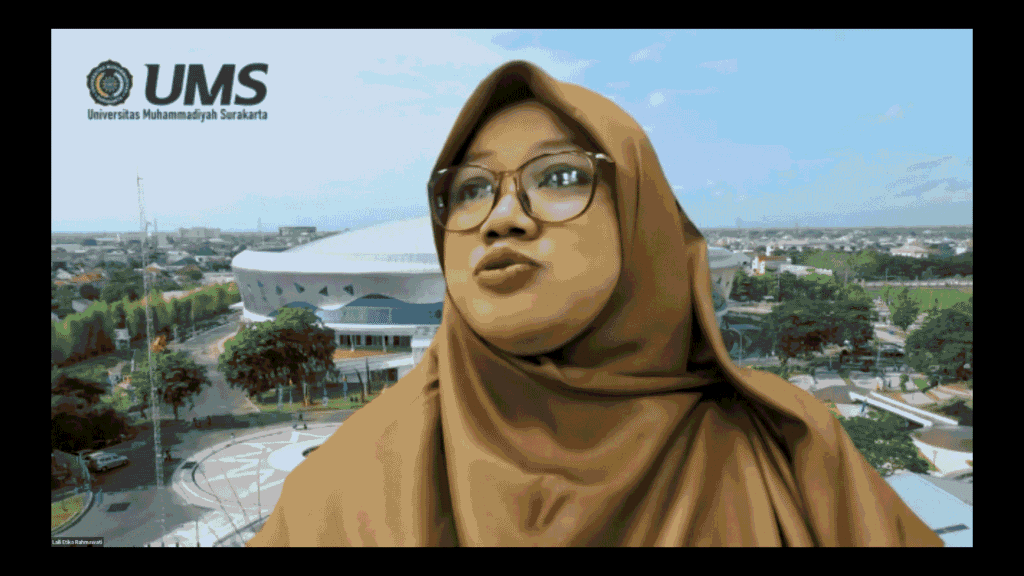
During her presentation, Dr. Laili highlighted the current roadmap for curriculum documentation. She made a specific note regarding the Master’s program, which is deemed in need of an immediate accelerated evaluation to avoid falling behind schedule.
However, she also emphasized a golden rule in the academic realm: a curriculum must not be altered mid-way before it has been fully implemented.
“The revitalization or renewal of a major curriculum can ideally only be executed after one full cycle has run its course, which is approximately four to five years post-implementation. Therefore, we must ensure its execution is timely, structured, and in accordance with the directives from Kemdikti,” Dr. Laili explained.
Based on this mapping, the UMS Faculty of Psychology has set clear deadlines for curriculum renewal: The Master’s (S2), Doctoral (S3), and Professional Programs are scheduled for 2026, while the Undergraduate Psychology Program (S1) will be finalized in 2028.
Specifically for the S2 and S3 levels, Prof. Tari, as the Head of the Study Program, was urged to simultaneously align the updates to the Semester Lesson Plans (RPS) to ensure all documents are up-to-date and complete.
Beyond Just Documents: It’s About Graduate Quality

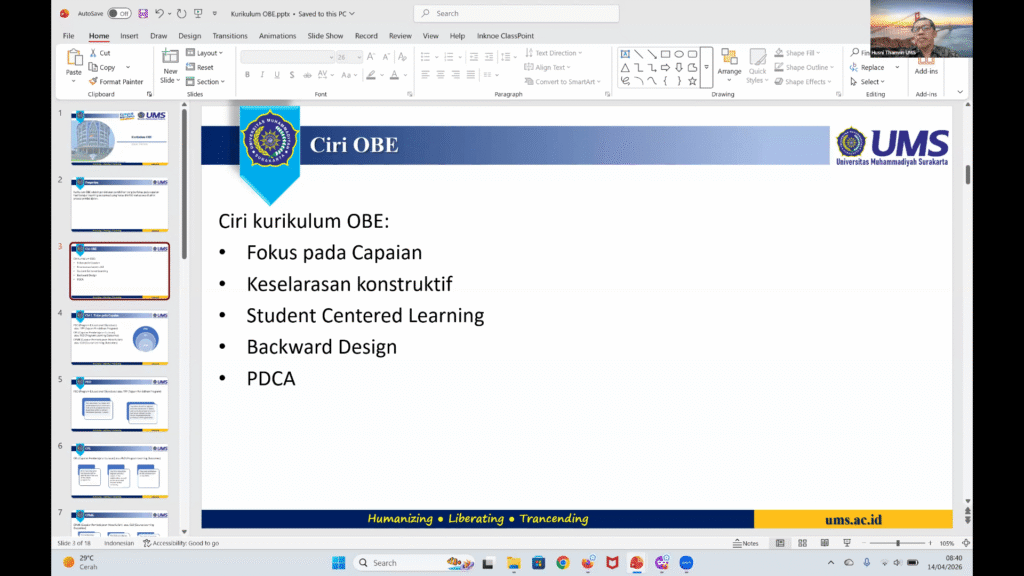
The discussion grew sharper as Husni unraveled the common thread between the Outcome-Based (OB) Curriculum System, Program Outcomes (PO), and Graduate Learning Outcomes (CPL). Often, these measurements are perceived merely as administrative routines. In reality, these three elements serve as the primary metrics of student success.
“Measuring the CPL is our way of seeing whether graduates truly achieve the competencies we promised in the curriculum. What must be underlined is that CPL measurement must be conducted routinely every year, not just when we want to change the curriculum,” Husni asserted.
Husni also clarified that study programs do not need to wait for a new curriculum to be ratified before they start measuring the CPL and CPMK (Course Learning Outcomes). Both can be measured using the newly launched evaluation system, which will also make it easier for study programs to maintain both national and international accreditation standards.
Data Triangulation and Tactical Steps Forward
To ensure the success of this major agenda, the UMS Faculty of Psychology has formulated several tactical steps binding all study programs, which include:
At the close of the meeting, Vice Dean I of the Faculty of Psychology Wisnu Sri Hertinjung, Head of the Professional Psychology Program Susatyo Yuwono, and Head of the Undergraduate Program Afriza Animawan Arifin stated their readiness to dive in directly to oversee and ensure that the entire process of CPL measurement and evaluation reporting in each study program is completed on time.
With the implementation of this Needs Assessment, the UMS Faculty of Psychology once again proves that educational innovation cannot remain stagnant. Continuous evaluation is the master key to producing psychology graduates who are not only theoretically brilliant but also resilient and highly relevant in the real world.


