UMS Faculty of Psychology Trains AUM Gatak Teachers in Feature Writing to Strengthen the Dakwah Movement’s
[Repost] Surakarta, 4 July 2026 – The Faculty of Psychology at Universitas Muhammadiyah Surakarta (UMS) has partnered with the Research and Development Institute (LPPA) of the ‘Aisyiyah Branch Leadership (PCA) in Gatak to run a feature-writing training session for 47 teachers from Muhammadiyah’s charitable enterprises (AUM) across Gatak Sub-district, on Saturday (4/7/2026). The session was aimed at sharpening teachers’ ability to produce inspiring journalistic writing, while also helping to record examples of good practice within the Muhammadiyah community.
The training was funded through UMS Faculty of Psychology’s Individual Lecturer Development (PID) scheme, put forward by Prof. Dr. Sri Lestari, M.Si., Psikolog. She explained that the initiative represents a strategic step towards broadening teachers’ skill sets, so that they are equipped not only as classroom educators but also as writers capable of sharing inspiring stories with the wider public.
“A teacher’s competence shouldn’t stop at classroom teaching — it also needs to grow in the area of journalistic writing. Through feature writing, teachers can share positive stories that inspire the wider community,” said Sri Lestari on Thursday (16/7/2026).
The Head of PCA Gatak, Endang Mulyani, S.Pd., expressed her appreciation for the support given by the UMS Faculty of Psychology in building teachers’ capacity through this writing training.
“Writing skills, feature writing in particular, are a valuable asset for our teachers. I do hope that, through this training, our educators will be able to capture every act of kindness, every innovation, and every achievement at their respective schools in writing that truly inspires. In that way, our work won’t just be known within our own circles — it will become part of the movement’s wider, enlightening outreach,” she said on Thursday (16/7/2026).
Echoing this sentiment, the Deputy Head of PCA Gatak, Dra. Diah Maharsi, M.Pd., expressed her hope that the training would not end with a single session, but would be followed up with further mentoring or workshops so that teachers’ writing skills continue to develop.
In her view, feature writing can serve as an emotional bridge between writer and reader, allowing educational messages and Muhammadiyah’s values to be conveyed far more effectively.
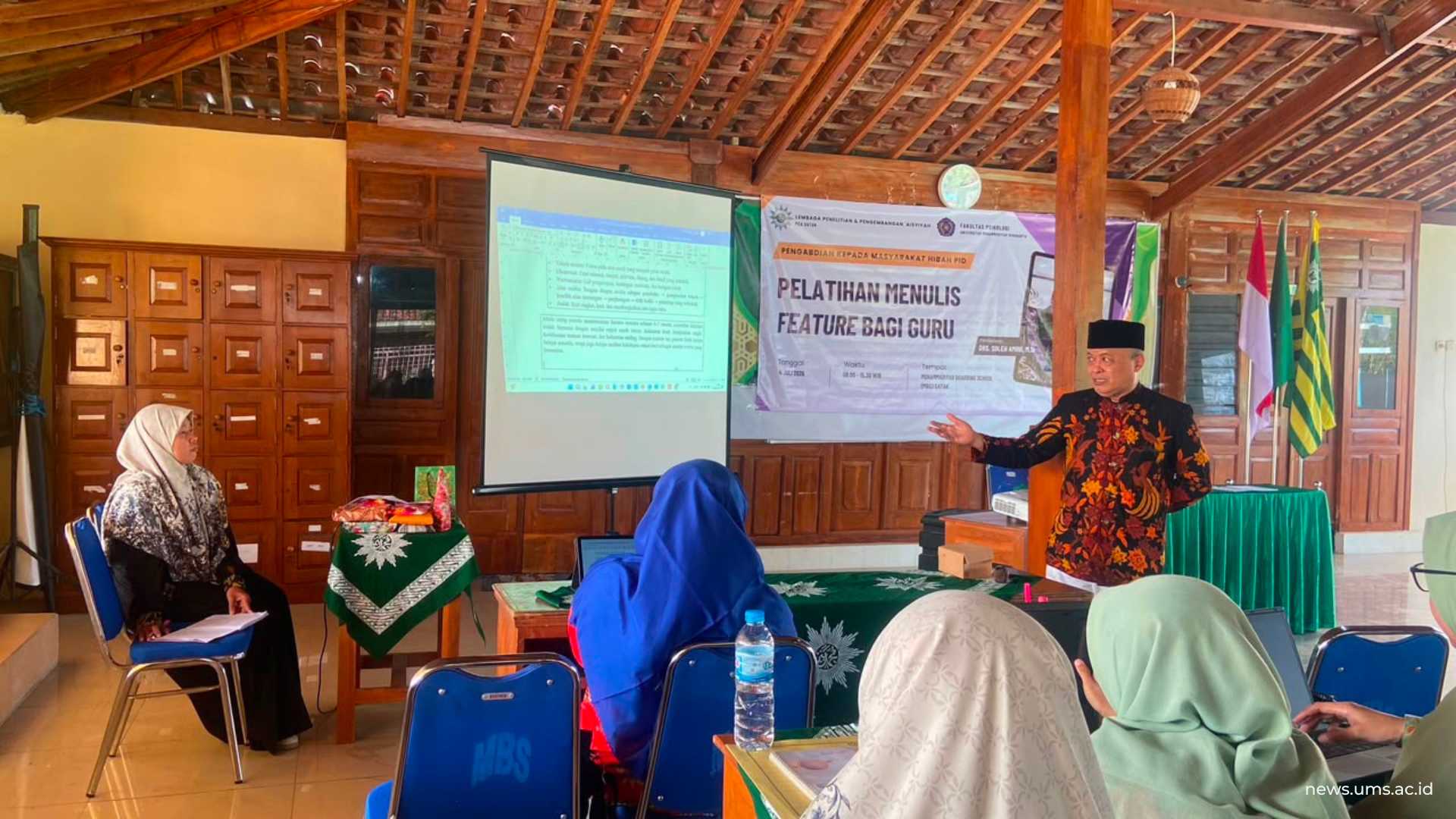
The training, held at the Muhammadiyah Boarding School (MBS) Gatak Joglo, featured UMS Faculty of Psychology lecturer Drs. Soleh Amini, M.Si., Psikolog, as the guest speaker. Proceedings opened with the singing of Indonesia Raya, the Muhammadiyah anthem, and the ‘Aisyiyah anthem.
During the presentation, Soleh Amini explained that feature writing differs in character from straight news reporting. Feature writing, he noted, leans on a narrative, humanistic and in-depth approach, one capable of delivering a genuinely emotional experience for readers.
“News tends to go stale quickly, whereas a feature holds its value for far longer, because it draws out the human side and the deeper meaning behind an event,” he explained.
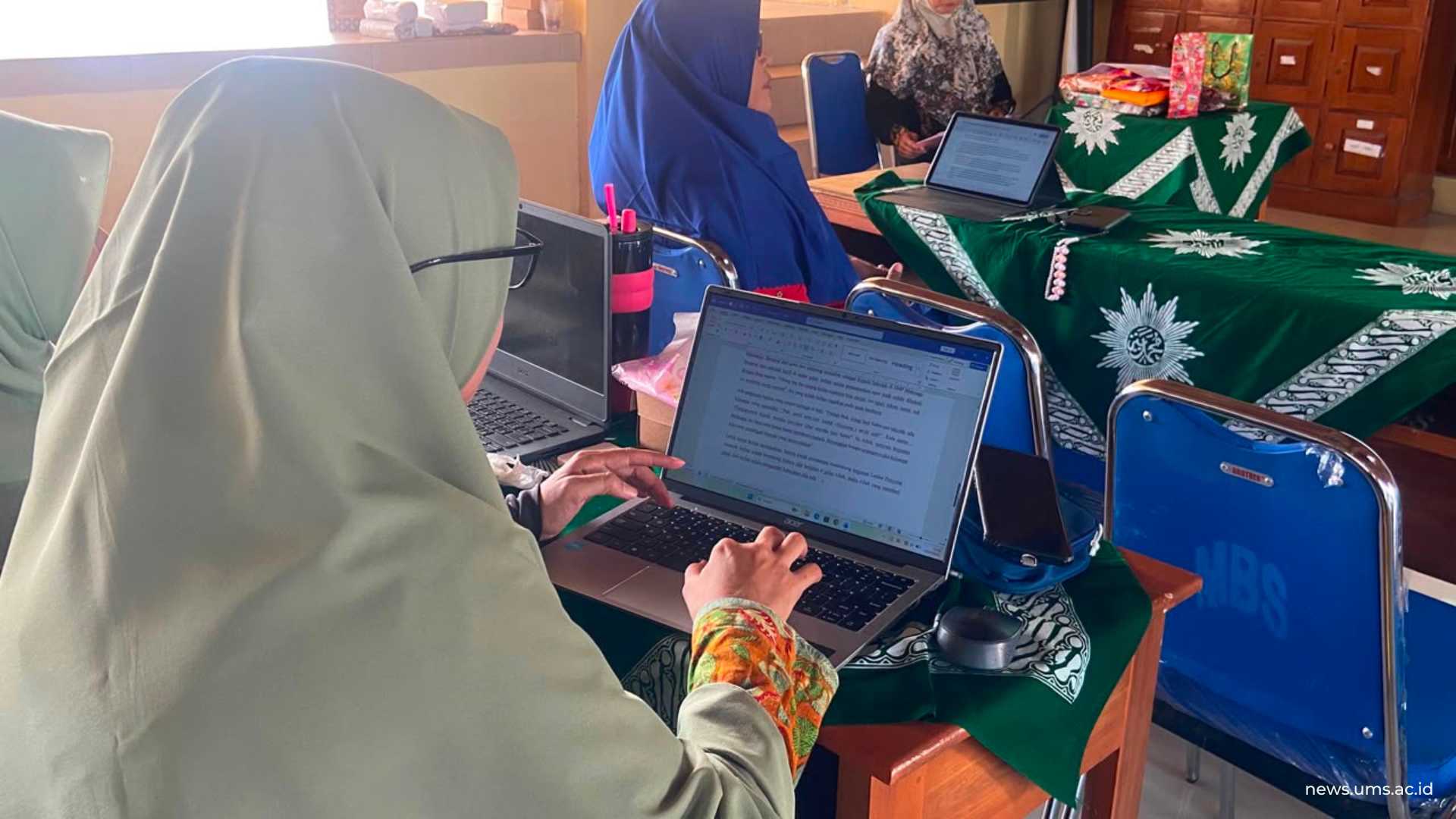
Beyond receiving the presentation, participants also had the chance to put feature-writing techniques into practice straightaway. Their resulting drafts were then reviewed together with the guest speaker, who offered feedback on structure, narrative flow and word choice, with a view to making the pieces fit for publication in the mass media.
The session was lively and interactive throughout. Teachers took an active part in discussing the various challenges they face when writing, while the speaker shared tips and strategies for crafting features that are engaging, informative and rich in narrative value.
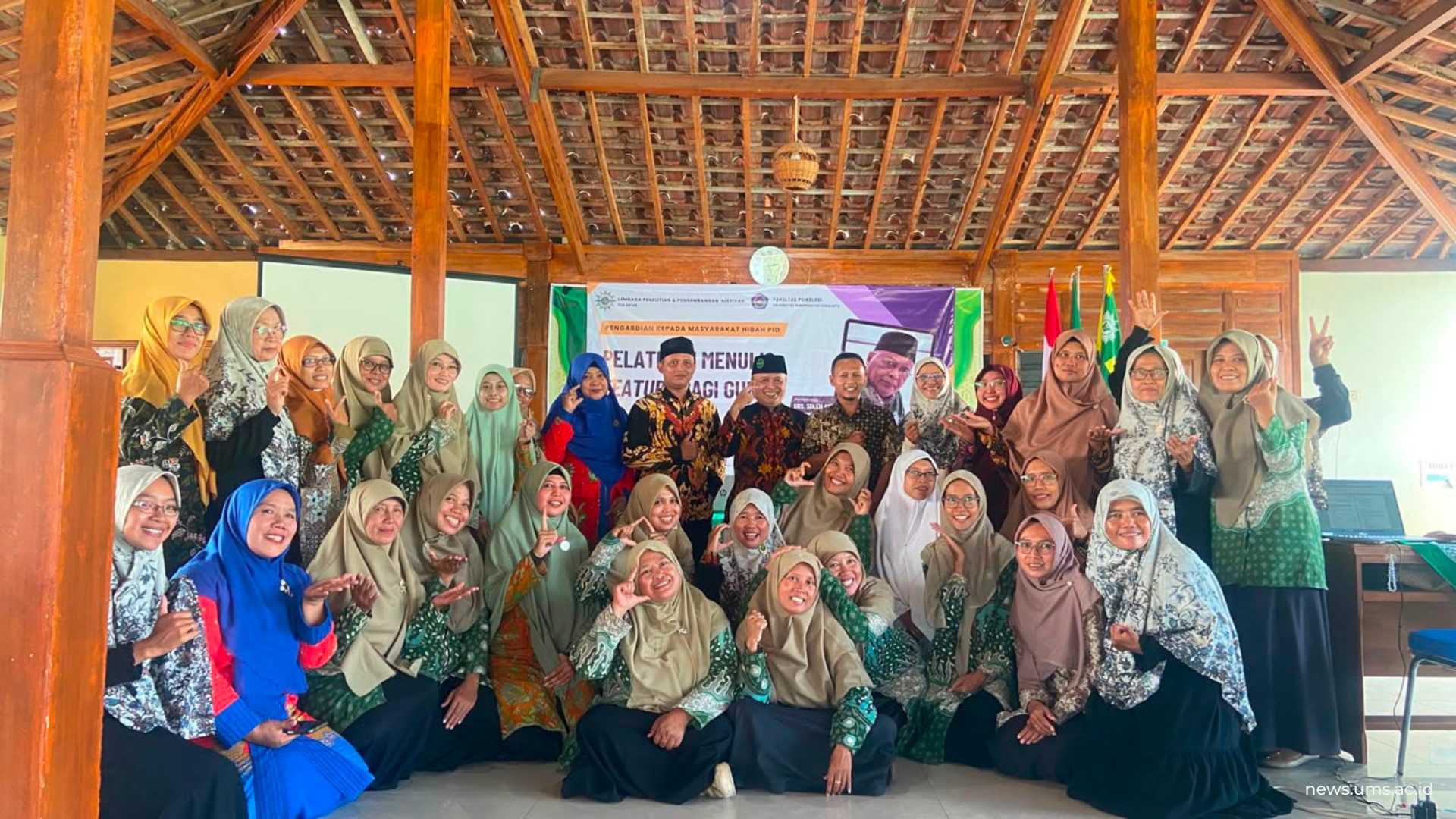
The event closed with the presentation of a token of appreciation to the speaker, a group photograph, and a round of door prizes for participants, which added further cheer to the proceedings. Through this initiative, the UMS Faculty of Psychology and LPPA PCA Gatak hope to see more feature pieces emerge documenting good practice, educational innovation, and the work of Muhammadiyah and ‘Aisyiyah, as part of a wider outreach that brings enlightenment to the community. (Humas)