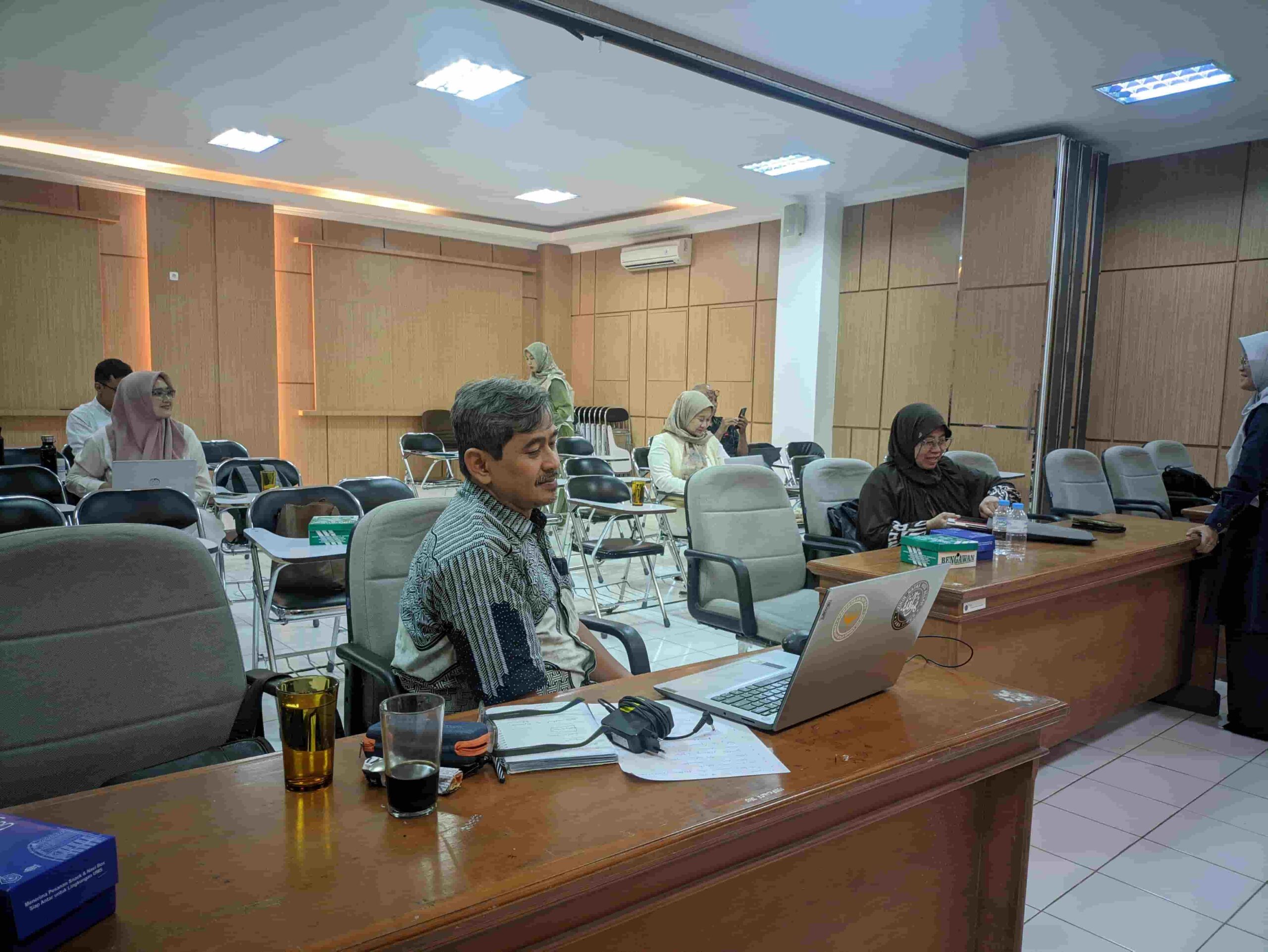
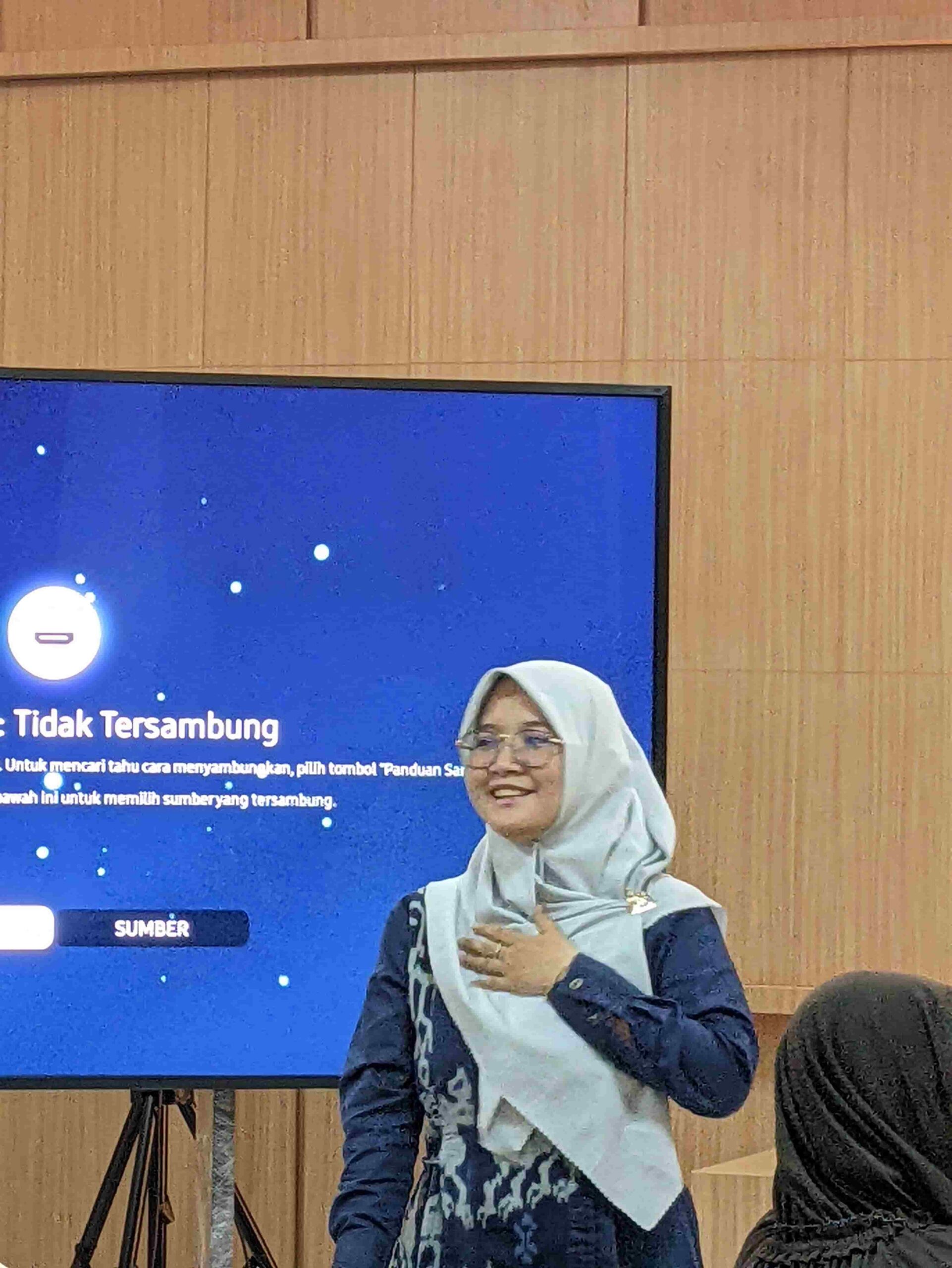
Surakarta, 15 July 2026 – The Centre for Islamic Psychology Studies at the Faculty of Psychology, Universitas Muhammadiyah Surakarta (UMS), has held a Workshop on Research Proposal Writing and Scientific Publication, the first of a three-stage capacity-building programme designed for academic staff. This inaugural session featured Dr Nisa Rachma Nur Anganthi, M.Si., Psychologist, as the principal speaker, and was held in the Hybrid Room on the second floor of the Faculty of Psychology, UMS. The initiative reflects a collaborative effort among the Faculty’s various research centres, with an intended outcome that extends well beyond proposal drafting alone — culminating, ultimately, in publication within internationally indexed, reputable journals.
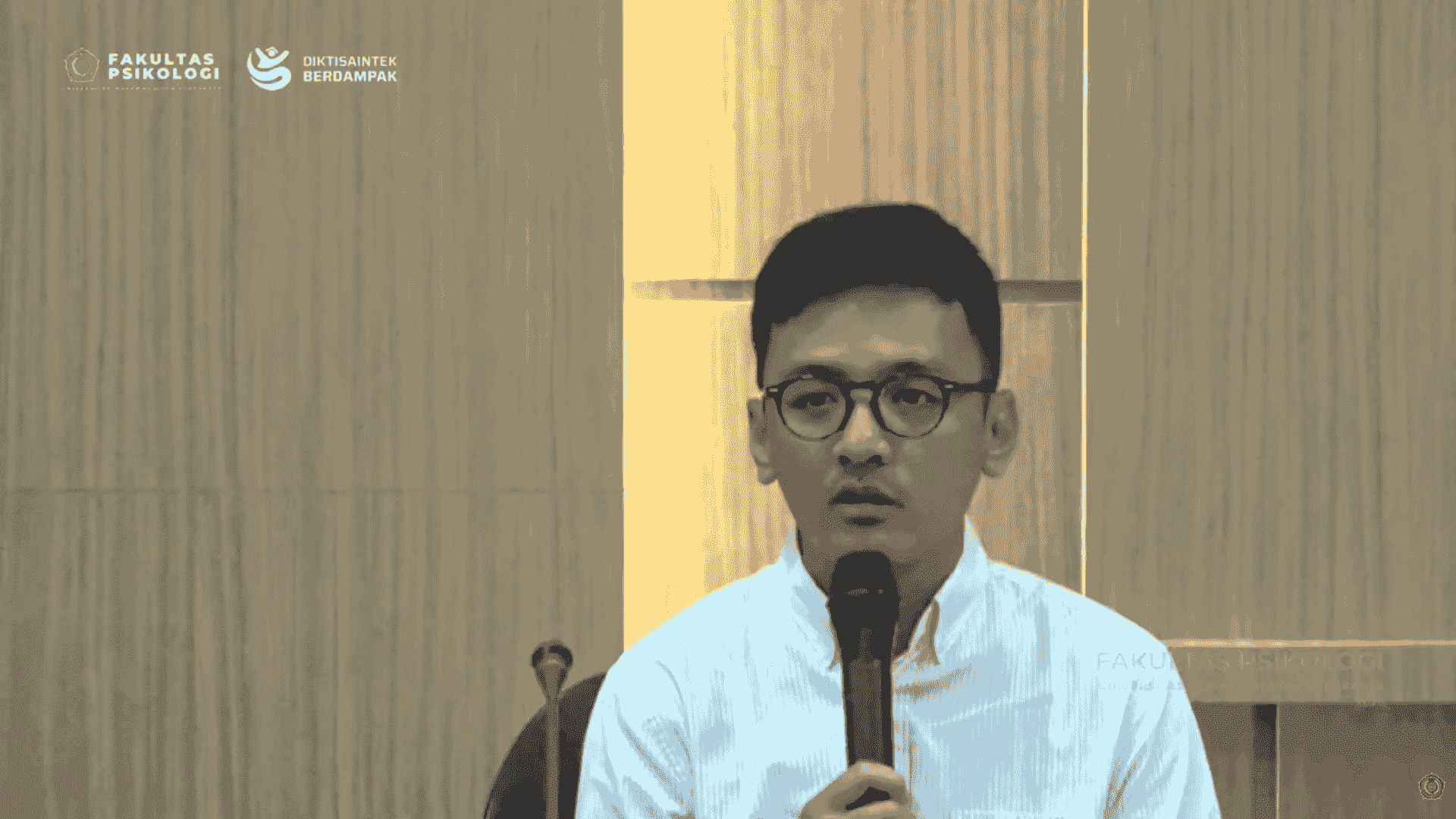
The proceedings were moderated by Permata Ashfi Raihana, M.A., and formally opened by the Vice Dean III for Research and Publication, Audi Ahmad Rikardi, M.A. Full documentation of the event may be viewed via the following YouTube link.
In his opening remarks, Audi Ahmad Rikardi offered strategic guidance to the attending faculty members, emphasising that research activity ought to be oriented towards substantive scholarly contribution, rather than the mere fulfilment of administrative obligation.

“A research proposal is, in its truest sense, no mere administrative document — it is the embodiment of a scholarly journey, one that must yield tangible and sustained benefit for society.”
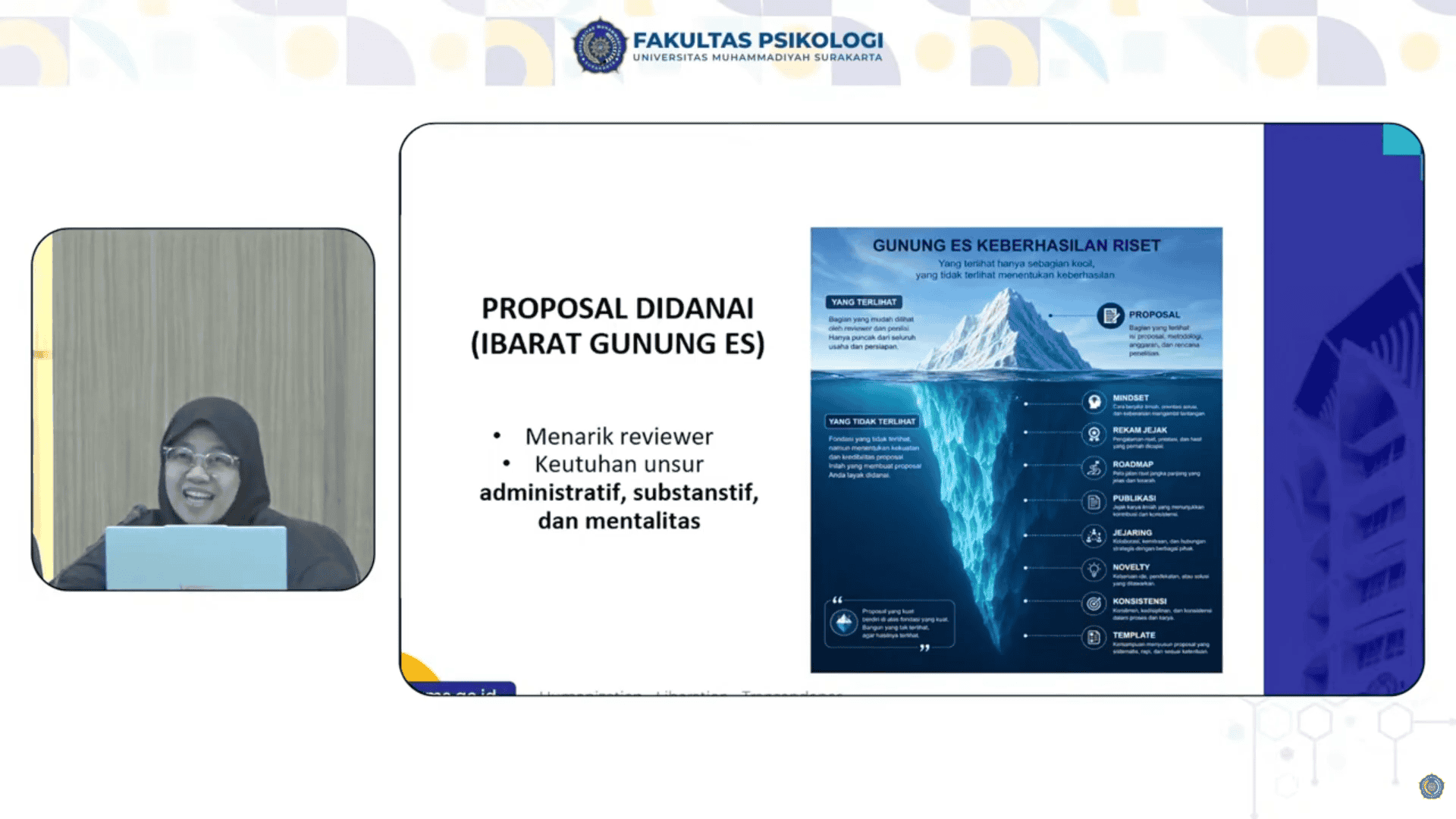
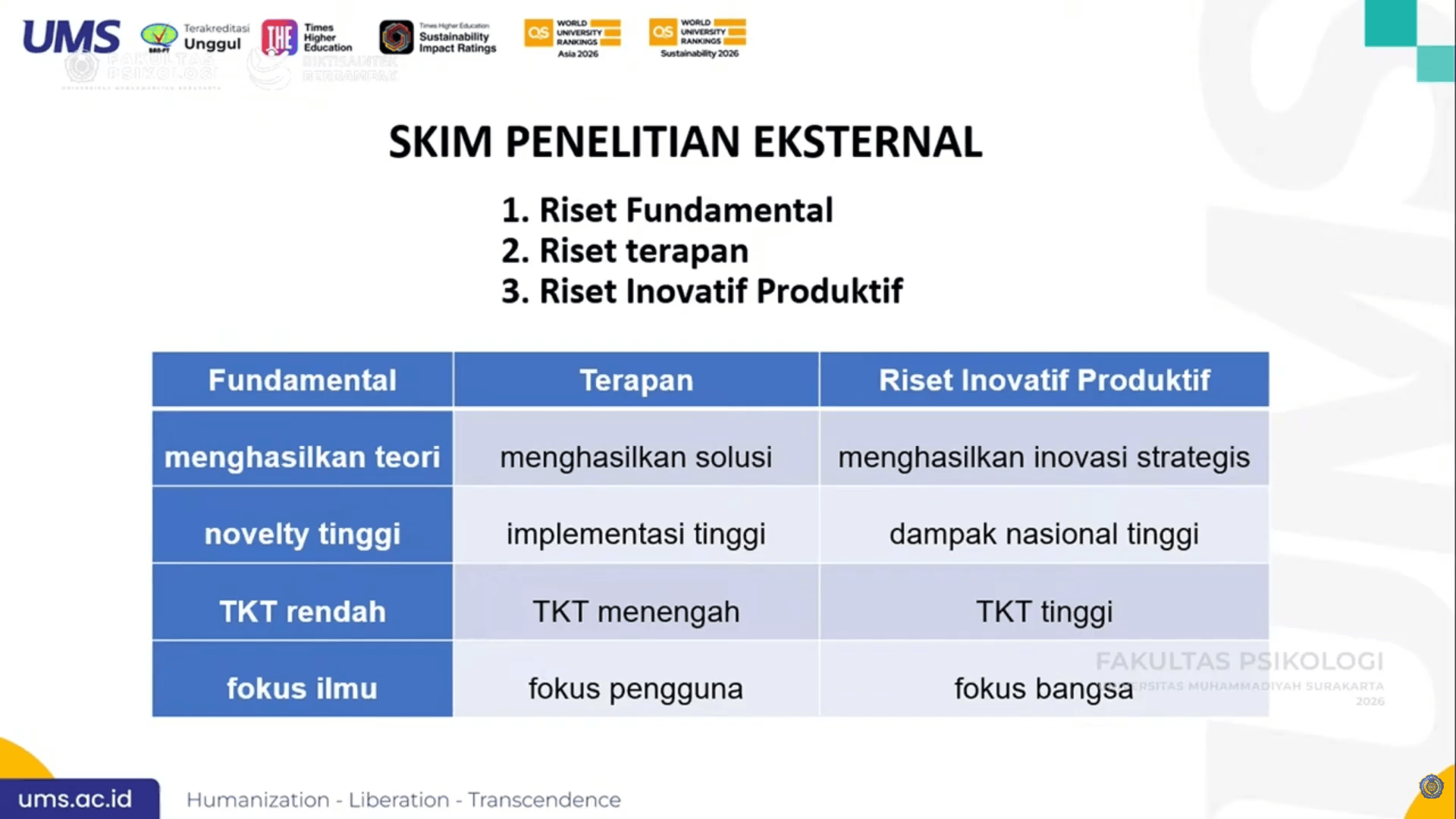
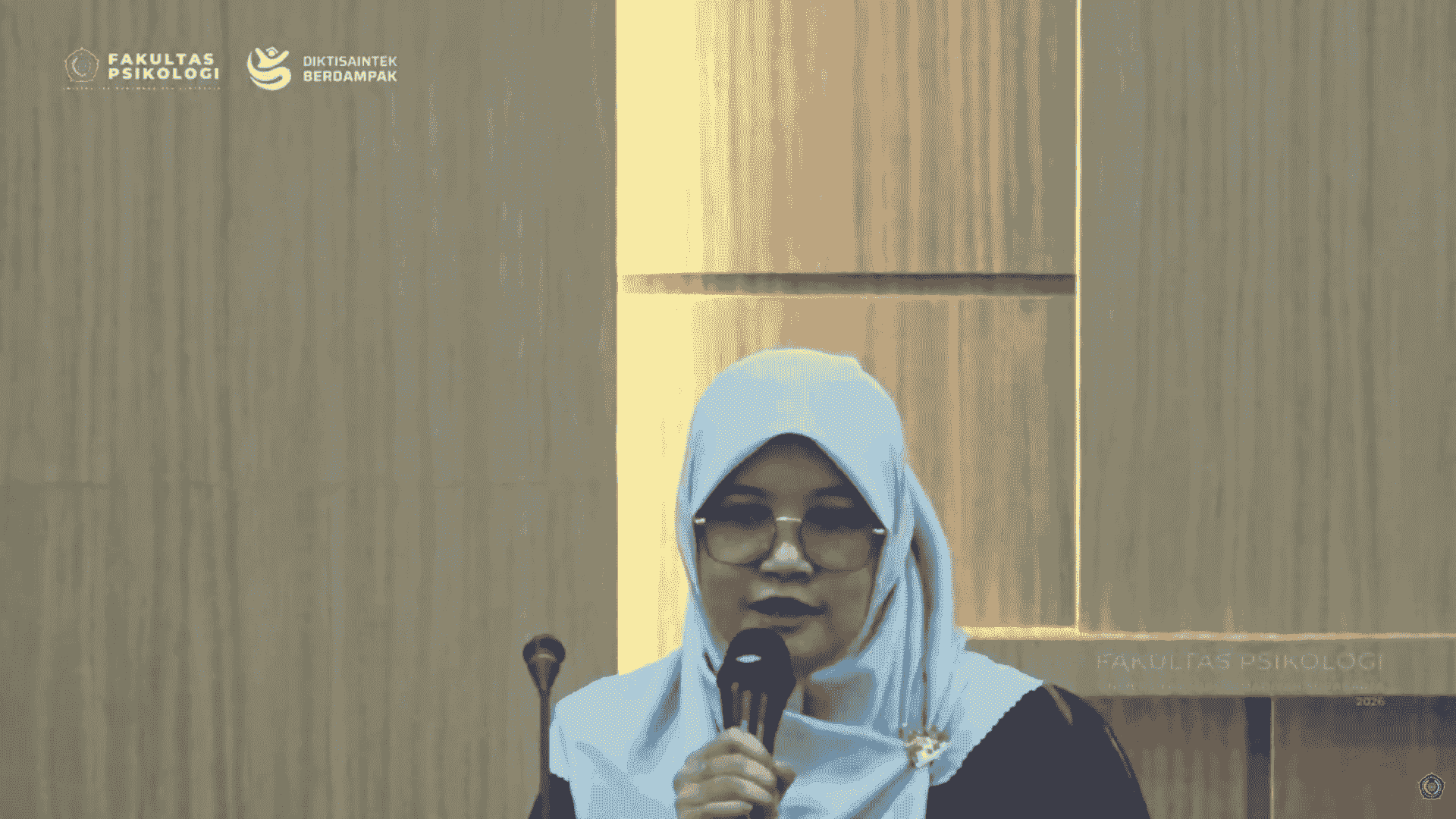
The core session, delivered by Dr Nisa Rachma Nur Anganthi, M.Si., Psychologist, addressed strategies for developing research proposals that are both competitive and well-positioned to secure funding. She observed that a proposal’s success rests not solely upon the intellectual calibre of the researcher, but equally upon a thorough grasp of reviewers’ evaluative standards and meticulous attention to administrative detail. Among the substantive points raised during the session were the following:
- Common Causes of Proposal Rejection: Proposals most often falter owing to poorly focused titles, research problems of insufficient significance, a lack of genuine novelty, weaknesses in methodological design, and non-compliance with the strict formatting requirements set by funding bodies.
- Three Pillars of Researcher Readiness: Researchers must attend to three principal dimensions of preparation: mental readiness (resilience in the face of rejection), administrative readiness (full adherence to prescribed formats), and substantive readiness (a coherent, consistent thread running from title through to bibliography).
- Collaboration and Network Building: Assembling a competent, complementary research team is a decisive factor in success. Dr Nisa shared her own experience of cultivating research partnerships through alumni networks and collaborations with experts at partner institutions.
- Innovation and Prototype Development: The integration of psychological science with technology — exemplified by the development of the Emocare application — offers a concrete illustration of how cross-disciplinary collaboration can yield solutions of wide-reaching social impact.
Dr Nisa also spoke candidly of her own academic journey, including the repeated setbacks she encountered in pursuing grant research funding prior to reaching her current standing. She advised researchers to study application guidelines with great care, to engage actively with reviewers’ feedback, and to abandon the habit of drafting proposals under last-minute pressure — colloquially known in Indonesia as the SKS (or “cramming”) approach — in favour of a well-structured timeline established well ahead of submission deadlines.
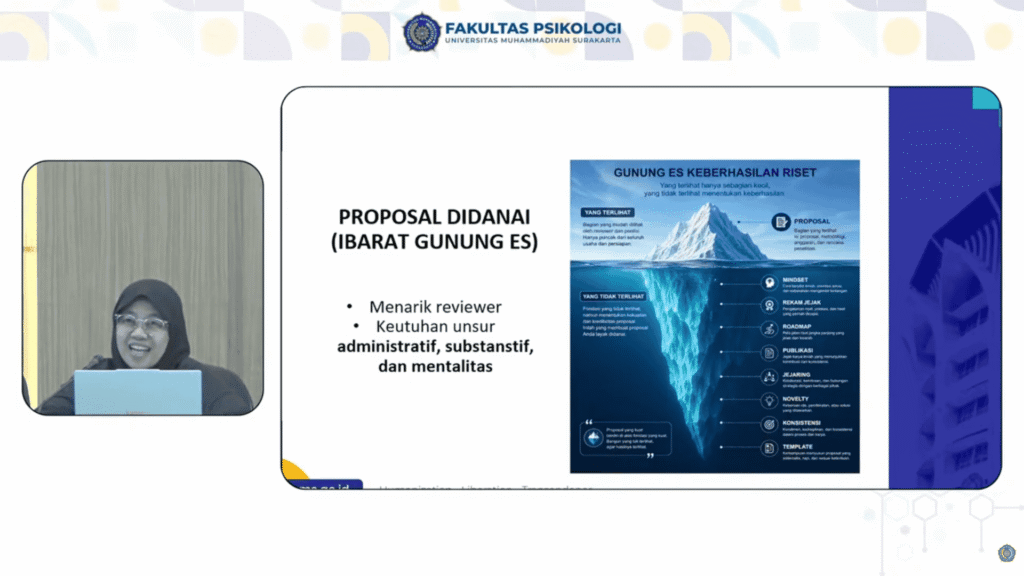
In closing her session, Dr Nisa distilled the essence of proposal-writing success into four key principles:
- Mental Preparedness: Cultivating the resilience to accept the possibility of failure, to remain undeterred by setbacks, and to persist through repeated cycles of refinement.
- Administrative Preparedness: Full compliance with prescribed templates, formatting conventions, and word limits stipulated by funding institutions.
- Substantive Preparedness: Maintaining a consistent line of argument from title to bibliography, ensuring the significance and broad relevance of the research problem, and articulating clearly the gap and novelty the research addresses.
- Collaboration and Research Roadmap: Building a competent, complementary team and establishing a clear research roadmap as part of a longer-term scholarly trajectory.
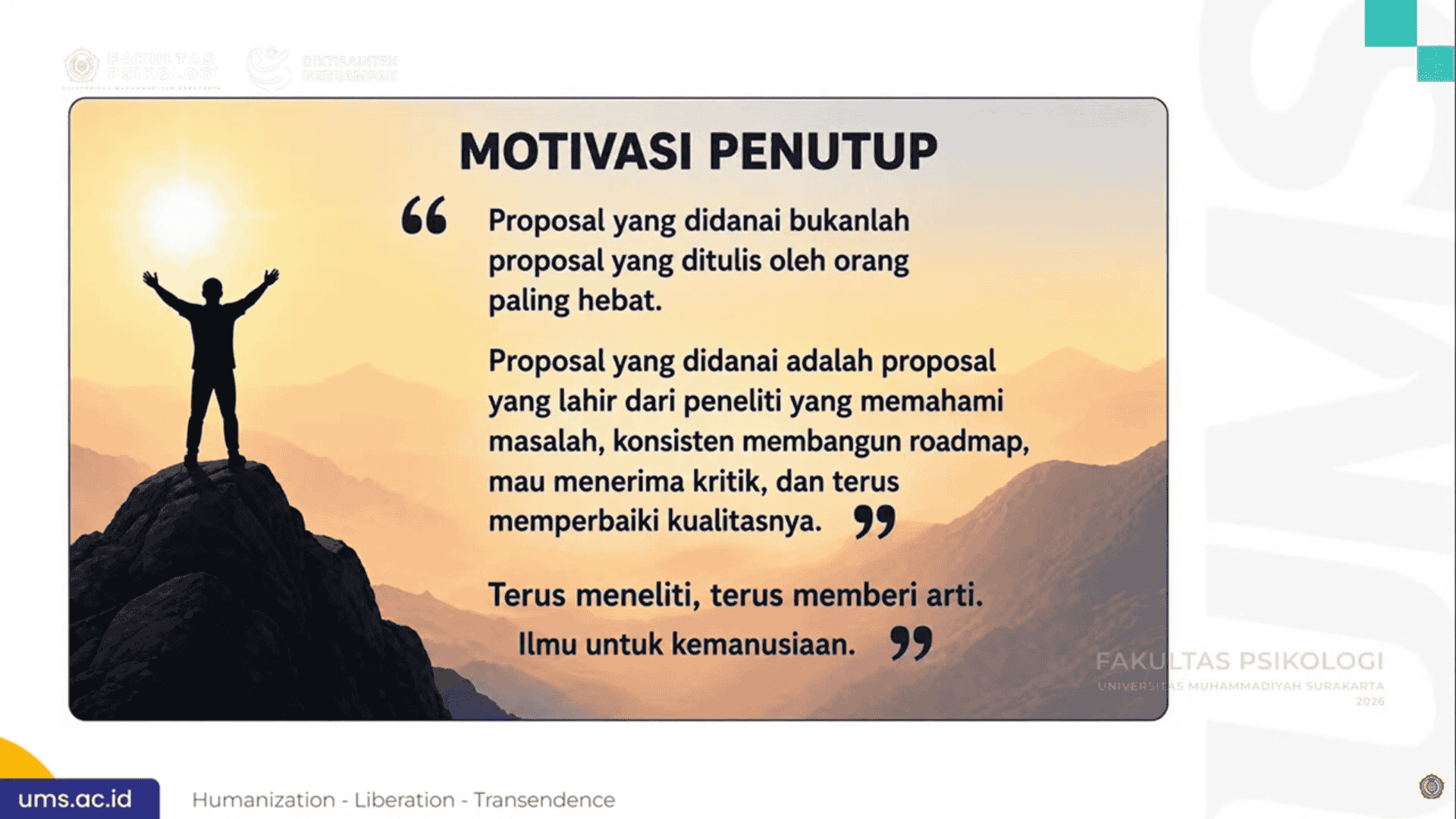
Dr Nisa concluded the session with a reflection that resonated deeply with the attending researchers:
“A funded proposal is not one written by the most brilliant researcher. Rather, it is one that emerges from a researcher who understands the problem at hand, consistently builds their research roadmap, remains open to critique, and continually strives to refine the quality of their work.” — Dr Nisa