The UMS Faculty of Psychology Partners with 49 Aisyiyah Educators in Klaten to Strengthen the Foundations of Early Childhood Education
Surakarta, 2 July 2026 – Preschool education is not merely a stepping stone before children enter primary school, but a golden period that forms the foundation of their future. Recognising this crucial matter, the Faculty of Psychology at Universitas Muhammadiyah Surakarta (UMS) has taken a proactive step by partnering with the Bustanul Athfal Teachers Association (IGABA) of South Klaten to hold a teaching competency training programme.
Entitled “Teaching Early Childhood Based on Child Development”, the event held at Wisma Yatim in Ngalas Village, South Klaten, on Thursday (25/6/2026) became an interactive learning space for 49 educators. The participants are at the forefront of 19 Aisyiyah preschool educational institutions in the area, encompassing Playgroups (KB), Raudhatul Atfal (RA), and Kindergartens (TK).
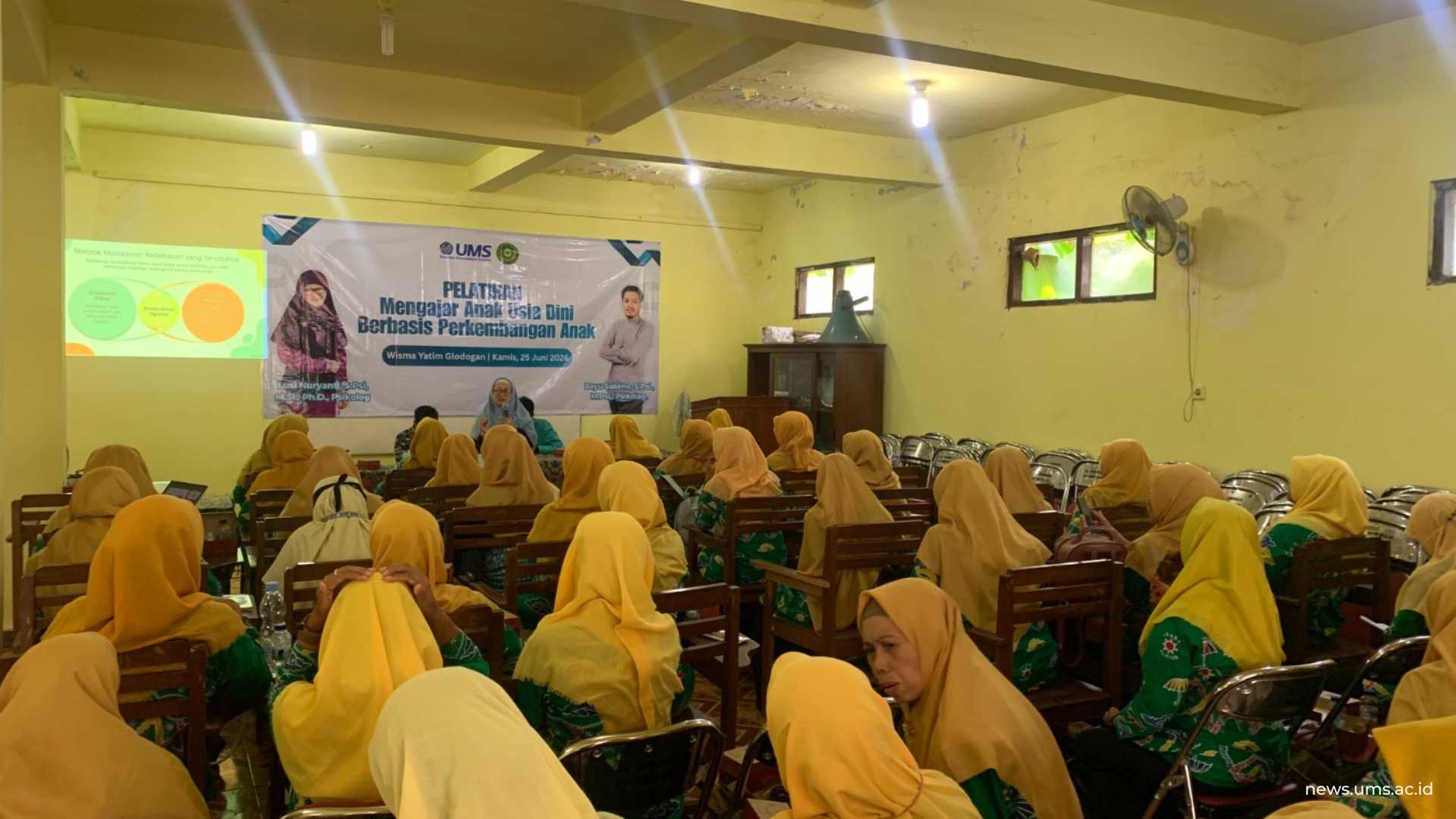
This training featured two experts and practitioners from the UMS Faculty of Psychology, namely Lusi Nuryanti, M.Si., Ph.D., Psychologist, and Bayu Suseno, M.Psi., Psychologist. Both dismantled outdated paradigms and equipped participants with teaching methods that align with children’s psychological developmental stages.
Lusi Nuryanti, who also serves as the head of the community service team, highlighted the profound impact a teacher has in maximising a child’s potential from an early age. According to her, a deep understanding of developmental characteristics is an essential prerequisite before designing classroom learning scenarios.
“Every child is unique. They grow at a pace and with characteristics that cannot be generalised. Teachers need to craft learning activities that are not solely oriented towards academic abilities, but also stimulate social, emotional, linguistic, motor, and cognitive development in a balanced manner,” Lusi asserted on Wednesday (1/7/2026).
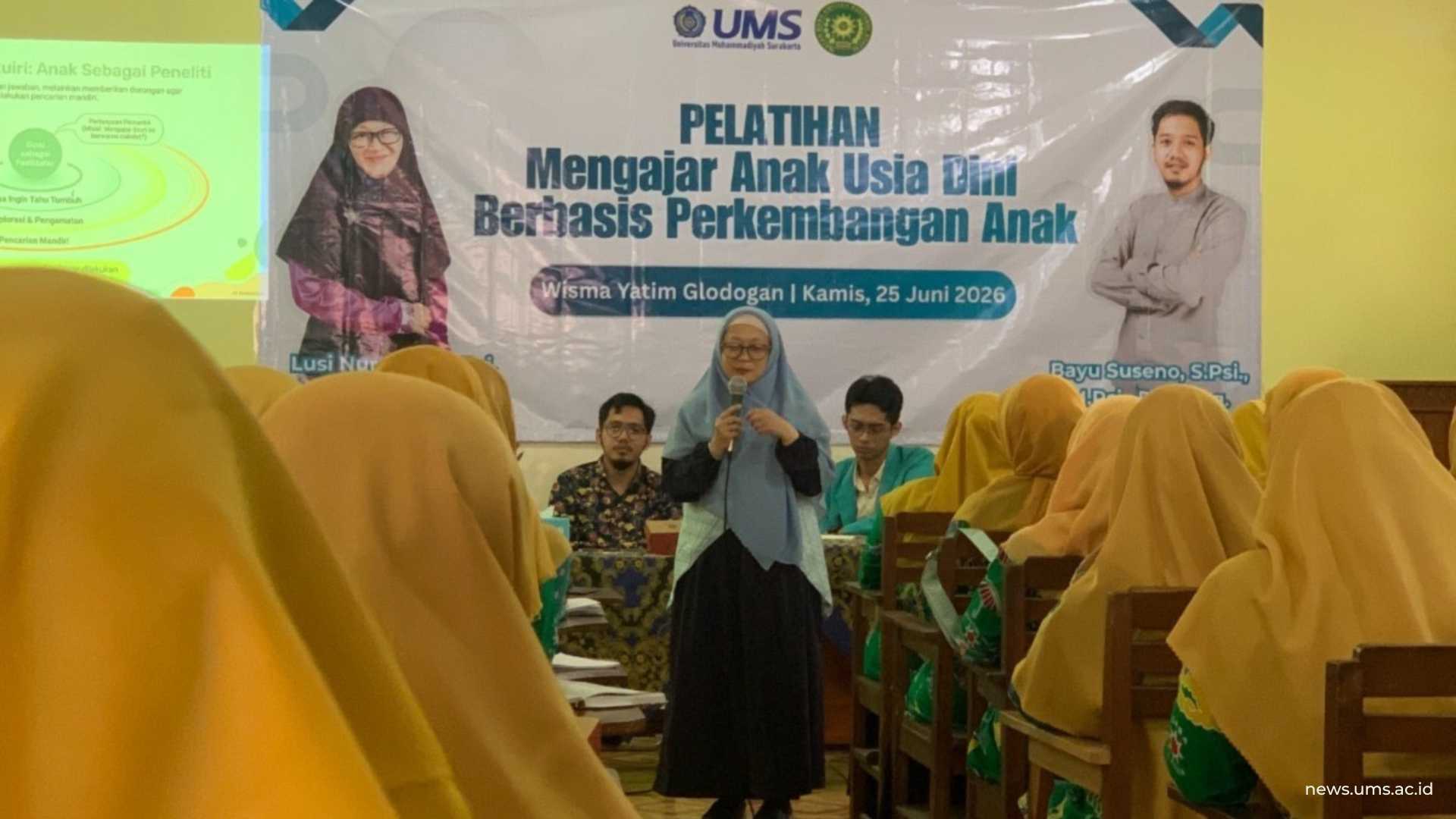
This strategic step to bridge the gap between higher education’s academic sphere and the realities on the ground was designed to avoid a one-way approach. Instead, participants were invited to delve into the material through two-way discussions and experience-sharing sessions. The real challenges they have been facing in the classroom were thoroughly examined.
Interestingly, the UMS community service team did not run the programme alone. They deployed four students—two undergraduates and two postgraduates—as a concrete manifestation of implementing experiential learning.
During this session, Winarningsih, a UMS Master’s student in Psychology who also serves as the Headteacher of an Aisyiyah Kindergarten and an IGABA Magetan activist, stepped forward to share her best practices. The real-world experiences she has successfully implemented at her school served as a distinct source of inspiration for the other participants.
This emerging synergy garnered warm appreciation. The Chairwoman of IGABA South Klaten, Sri Suparti, S.Pd., views this collaboration between universities and professional organisations as a breath of fresh air for improving the quality of early childhood education in her region.
“The material presented is incredibly grounded and directly addresses our needs in the field. We certainly have high hopes that this kind of synergy will continue. Educators’ knowledge must be continuously updated as time goes on,” Sri remarked.
A similar sentiment was shared by Siti Masitoh, a representative from KB Aisyiyah Ngalas. For her, this training was not merely a routine event, but an oasis of highly applicable knowledge.
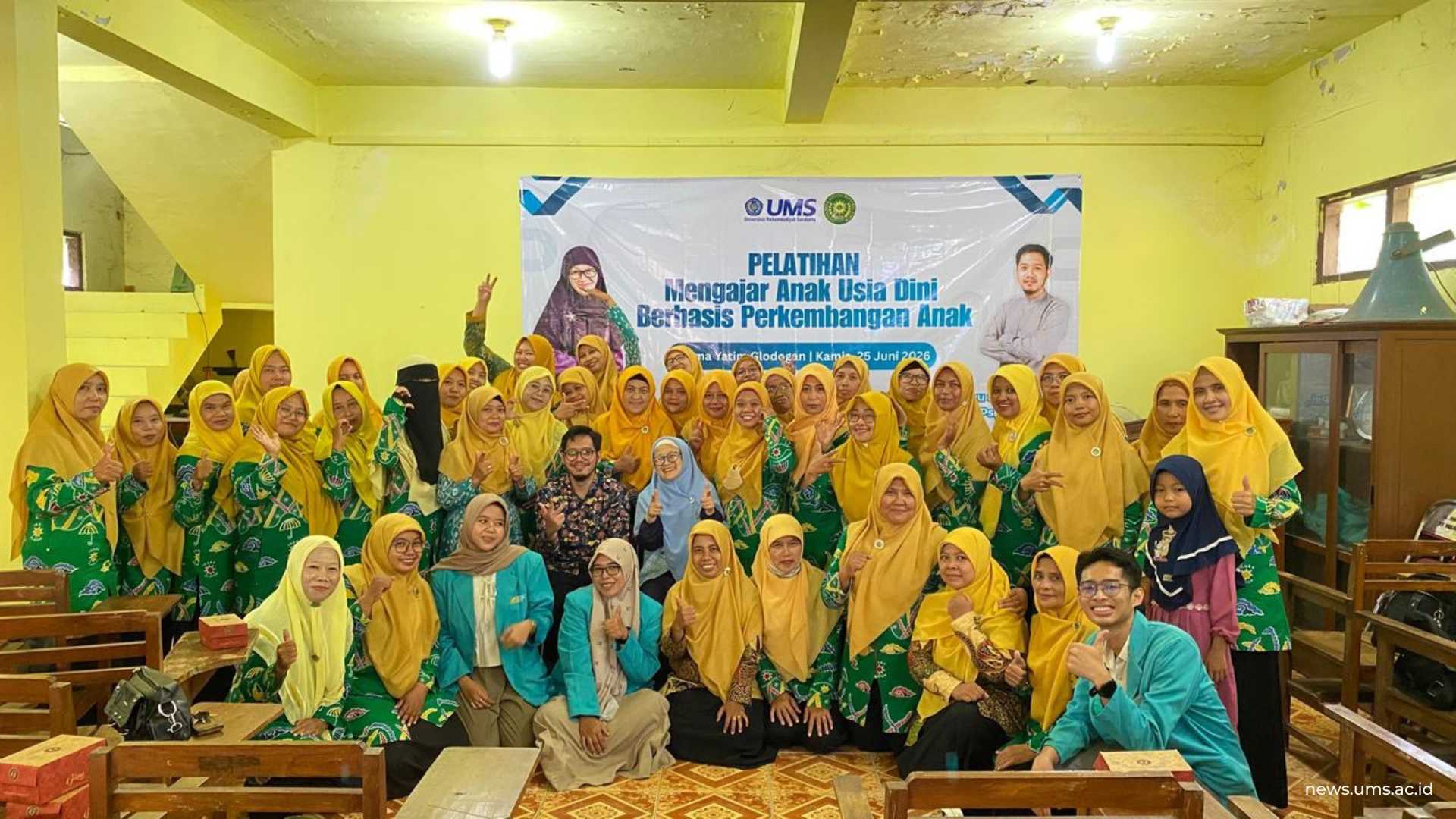
“We are immensely grateful. Not only was the material easy to digest and provided a fresh perspective on how to guide children, but this training was also facilitated completely free of charge. This is a manifestation of incredible support that significantly helps us teachers to keep improving,” Masitoh expressed enthusiastically.
Through this initiative, the commitment of the UMS Faculty of Psychology alongside IGABA South Klaten appears to be yielding tangible results. It is a long-term investment to ensure that children receive the best possible support during the most critical period of their growth.